Feeds:
Posts
Comments

Archive for the ‘boic’ Category

Article from TechCrunch.

Your Powerpoint pitchdeck is so boring. So. Freaking. Boring. Although tech bloggers aren’t sent startup’s actual pitchdecks as often as investors are (thankfully), we’re still walked through them on dreadful, “let me read to you from my Powerpoint” phone calls more often than should be socially acceptable. That’s why when image aggregator Piccsy, which is simultaneously a competitor to Pinterest as well as a top 20 content source for the site,  pinged us to take a look at its pitch deck, we were pleasantly surprised. A pitchdeck that’s actually fun to read? Can such a thing exist?

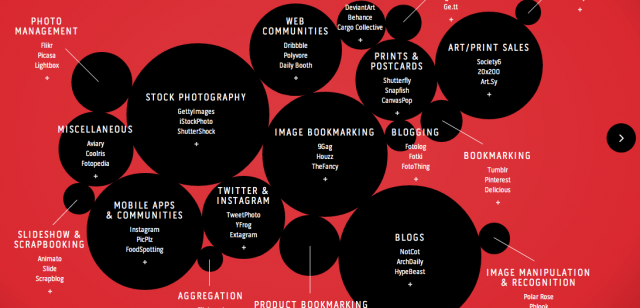
Piccsy.com/investors hosts the company’s public pitchdeck, and it’s a striking, visual representation of the data that would be typically found in bullet-pointed slideshows. The format leads you to wander through content and explore, much like Piccsy itself does. CEO Daniel Eckler admits that he doesn’t even know how to use Powerpoint. “I’ve only ever opened the program once or twice in my life,” he says. But it wasn’t just lack of know-how that led the company to ditch the idea of the traditional deck. As outsiders from Toronto, they wanted to stand out, Eckler says.

“We began with a problem (how to get investors to see our deck) and came up with a solution (create something unique, beautiful, informative, and easy to share), as opposed to going with the status quo,” Eckler explains. “This is conceivably the first thing investors are going to relate to when they see a company. Lots of companies that are innovative in other areas are sticking to an old model with their deck, even though they have the resources (dev/design) to do something special.”

Plus, he adds, a generic, Powerpoint-style deck wouldn’t be right for a site that’s all about discovering beautiful imagery.

For what it’s worth, the novel deck has been working. 50,000 pageviews and 15 inbound investor requests came in over the weekend, and the site got linked on Hacker News (where discussion delved into criticisms over content, however, but not the style.) Said one commenter, “it’s a beautiful presentation. I’m jealous….I’d absolutely pay to get a site like that.”

Say, Piccsy – if that whole image aggregation thing doesn’t work out…

The screenshot above is just a snippet. The full site is here.

Read more on Piccsy at www.piccsy.com.

Read the original article here.

Read Full Post »

Article from Fenwick & West.

Background—We analyzed the terms of venture financings for 114 companies headquartered in Silicon Valley that reported raising money in the first quarter of 2012.

Overview of Fenwick & West Results

  • Up rounds exceeded down rounds in 1Q12, 65% to 22%, with 13% of rounds flat. This showed continued solid valuations in the venture environment, although a small drop off from 3Q11 and 4Q11, when 70% of rounds were up rounds. This was the eleventh quarter in a row in which up rounds exceeded down rounds.
  • The Fenwick & West Venture Capital Barometer™ showed an average price increase of 52% in 1Q12, a decline from the 85% reported in 4Q11, but still a solid showing.
  • We note some weakness in late stage financing (Series E and higher) valuations, where 37% of the financings were down rounds and the Barometer reported only a 12% increase. Series B financings were also not as frothy as they have been, with a Barometer reading of 58%, the lowest since 4Q09, but still very solid.

The results by industry are set forth below. In general software and digital media/internet companies continued to see the strongest valuation increases, with hardware and life sciences lagging.

Overview of Other Industry Data

  • Venture valuations were healthy, but investment was down.
  • M&A valuations were up, but the number of deals was down.
  • Venture fundraising was mixed, but corporate venture investing was up.
  • IPOs were up, and the passage of the JOBS Act is a further encouraging signal for the public market, but continuing global financial uncertainty, especially in Europe, is a concern.

So what is the take-away? Venture fundraising continues to be problematic, and likely contributed to the decreased venture investment the last two quarters. However with IPOs improving, and interest rates still extremely low, there is reason to believe that venture fundraising will improve, if the global economic environment doesn’t further increase risk averseness. The M&A market slowed a bit in 1Q12, possibly to give participants a chance to evaluate the improvement in IPOs, and its possible effect on valuations, but corporate America has plenty to spend, evidenced by their increasing participation in venture investment. And the areas of entrepreneurial focus and innovation are broad, with mobile, cloud, security, big data and of course social media all attracting substantial attention.

Venture Capital Investment.

  • Venture capital investment in the U.S. declined for the second quarter in a row, with the decline evident in most major industry segments, including internet/digital media.
  • Dow Jones VentureSource (“VentureSource”) reported $6.2 billion of venture investment in 717 deals in 1Q12, a 16% decline in dollars from the $7.4 billion invested in 803 deals in 4Q11 (as reported in January 2012).
  • The PwC/NVCA MoneyTree™ Report based on data from Thomson Reuters (the “MoneyTree Report”) reported $5.8 billion of venture investment in 758 deals in 1Q12, a 12% decline from the $6.6 billion invested in 844 deals in 4Q11 (as reported in January 2012).

Merger and Acquisitions Activity.

  • M&A activity for venture-backed companies had mixed results in 1Q12, with deal volume declining for the second quarter in a row, to the lowest quarterly amount since 2009, but with Dow Jones reporting a significant increase in deal proceeds.
  • Dow Jones reported 94 acquisitions of venture-backed companies in 1Q12 for $18.1 billion, a 12% decline in transaction volume, but a 93% increase in dollars, from the 107 transactions for $9.4 billion in 4Q11 (as reported in January 2012).
  • Thomson Reuters and the NVCA (“Thomson/NVCA”) reported 86 transactions in 1Q12, a 7% decline from the 92 reported in 4Q11 (as reported in January 2012). Sixty-eight of the 86 deals were in the IT sector.
  • Dealogic reported that Google, Facebook, Groupon and Zynga purchased a combined 34 companies in 1Q12 (not necessarily all venture-backed).

IPO Activity.

  • IPO activity for venture-backed companies improved again in 1Q12, which was the best quarter for number of IPOs since 4Q07.
  • VentureSource reported 20 venture-backed IPOs raising $1.4 billion in 1Q12, compared to 10 IPOs raising $2.4 billion in 4Q11 (as reported in January 2012). There were 50 companies in registration at the end of the quarter.

We note that the new law that permits confidential IPO filings may delay future information on the number of companies in registration, as a substantial number of companies appear to be taking advantage of this alternative.

Thomson/NVCA reported 19 IPOs for $1.5 billion in 1Q12, compared to 12 IPOs raising $2.6 billion in 4Q11. Eleven of the IPOs were in IT and five in healthcare, and 95% were U.S.-based companies.

Venture Capital Fundraising.

  • Industry sources reported conflicting fundraising results for 1Q12, with Dow Jones reporting an increase in dollars raised and Thomson/NVCA reporting a decline. Taking an average of the two, venture capital fundraising and venture capital investing were approximately equal this quarter, but the number of funds raising money continues to be low.
  • Dow Jones reported that 47 U.S. venture funds raised $7 billion in 1Q12, a 35% increase in dollars over the $5.2 billion that was raised in 4Q11 (as reported in January 2012).

Thomson/NVCA reported that 42 U.S. venture capital funds raised $4.9 billion in 1Q12, a 13% decrease in dollars over the $5.6 billion raised by 38 U.S. funds in 4Q12 (as reported in January 2012). The top 5 fundraisers accounted for 75% of the total amount raised, with Andreessen Horowitz raising $1.5 billion and leading the way.

Secondary Markets.

  • The secondary market for venture-backed company shares is in uncharted waters.
  • The recently passed JOBS Act made filing for an IPO more appealing to companies, which could decrease the number of late stage private companies whose shares would be available for secondary trading. However, the Act also increased the maximum number of shareholders that private companies could have before registering with the SEC, which allows private companies to stay private longer, which could increase the pool of late stage private companies whose shares would be available for secondary trading.
  • Additionally, Facebook, which accounted for a large percentage of the trading on secondary exchanges, and whose shares were also purchased by secondary funds, just went public, and secondary trading of their shares ended at the end of March 2012.
  • And the venture-backed IPO market seems to be improving in general, providing more opportunity for late stage private companies to go public.
  • Second Market reported that issuers were the buyer in 54% of second market transactions, but only accounted for 1.7% of transaction proceeds, suggesting that issuers are using Second Market to purchase small amounts of shares from numerous sellers, likely to limit their number of shareholders.

Corporate Venture Capital.

  • With a challenging venture fundraising environment, we thought it would be useful to provide some information on corporate venture capital (“CVC”).
  • In general, CVC declined precipitously in 2009 as a result of the stock market decline and global financial problems in 2008. Since then it has rebounded significantly with corporate venture investment increasing from $1.4 billion in 2009 to $2.0 billion in 2010 to $2.3 billion in 2011. Similarly, CVCs participated in 12.7% of all venture deals in 2009, 13.6% in 2010 and 14.9% in 2011. That said, these amounts significantly lag 2007, the best year for CVC in the past decade, when CVCs invested $2.6 billion and participated in 19% of deals (data from the MoneyTree Report).
  • While companies like Intel and Cisco have long been significant players in CVC investing, it will be interesting to see how heavily the current wave of major Silicon Valley companies participate in CVC. One indiciation is that Google started Google Ventures two years ago with the goal of investing $100 million a year, and has invested in 20 start-ups through March 2012. (Data from San Jose Mercury)
  • Another indication of CVC activity is that the number of CVCs who are members of the NVCA has grown from 50 to 62 members in the past year, and now comprises 7% of the total membership. (Data from Dow Jones VentureWire)
  • CVC investment seems more focused in industries with large capital requirements like cleantech and biotech, which accounted for 23% and 16% of CVC investment respectively in 2010/2011, than are independent venture capitalists. (Data from the MoneyTree Report)

Venture Capital Sentiment.

The Silicon Valley Venture Capitalist Confidence Index® produced by Professor Mark Cannice at the University of San Francisco reported that the confidence level of Silicon Valley venture capitalists was 3.79 on a 5 point sale in 1Q12, a significant increase from the 3.27 reported in 4Q11, and the first increase in four quarters.

Nasdaq.
Nasdaq increased 16% in 1Q12, but has declined 10% in 2Q12 through May 21.

Read more here.

Read Full Post »

Article from Yobucko.

www.yobucko.com


Yo! How’s it going?  We hope 2012 is going well for you.  We just wanted to send you a quick reminder that taxes are due next Tuesday, April 17th.  If you haven’t finished them yet, don’t worry.  But you may want to do your taxes online and e-file so you can get them done quickly and get your tax refund fast.  If you are looking for the best tax software or some tax tips this weekend, check out YoBucko.

FREE FINANCIAL TOOLS
Also, if you are looking for some help organizing your finances, we’ve put together some free downloadable worksheets to help you with the money math.  Here are our latest additions:

  • Cash Flow Statement and Budget
  • Net Worth Statement
  • Home Buyer Worksheet
  • Student Loan Worksheet
  • POPULAR ARTICLES

Over the last few months, we’ve written more than 100 articles to help people in their twenties manage their money.  We’ve had some great feedback, but there are a few articles that were the most popular.  They were:

  • The Cost of Living the American Dream
  • 10 Financial Tips for Young Entrepreneurs
  • If I Had a Million Dollars
  • What to Do with Money: Wealth Building Tips
  • What Does the JOBS Act Mean to Average Investors
  • The Challenges of Social Entrepreneurship: Making Money and a Change

As always, we appreciate your continued support of YoBucko.  Over the coming months, we hope to bring you more and better information to help you make great financial choices.  Together, we hope to create a better financial future for the next generation of American leaders.

Share the Wealth,

Eric Bell

www.yobucko.com

Read Full Post »

Article from AboveTheCrowd.com  by Bill Gurly

A few relevant scenes from the recent blockbuster Moneyball:

Peter Brand: Billy, Pena is an All Star. Okay? And if you dump him and this Hatteberg thing doesn’t work out the way that we want it to, you know, this is…this is the kind of decision that gets you fired. It is!
Billy Beane: Yes, you’re right. I may lose my job, in which case I’m a forty four year old guy with a high school diploma and a daughter I’d like to be able to send to college. You’re twenty five years old with a degree from Yale and a pretty impressive apprenticeship. I don’t think we’re asking the right question. I think the question we should be asking is, do you believe in this thing or not?
Peter Brand: I do.
Billy Beane: It’s a problem you think we need to explain ourselves. Don’t. To anyone.
Peter Brand: Okay.

———————————

Grady Fuson: No. Baseball isn’t just numbers, it’s not science. If it was then anybody could do what we’re doing, but they can’t because they don’t know what we know. They don’t have our experience and they don’t have our intuition.
Billy Beane: Okay.
Grady Fuson: Billy, you got a kid in there that’s got a degree in Economics from Yale. You got a scout here with twenty nine years of baseball experience. You’re listening to the wrong one. Now there are intangibles that only baseball people understand. You’re discounting what scouts have done for a hundred and fifty years, even yourself!

These two scenes from Moneyball illustrate something that may be essential to modern business: the incredible value of youth and innovative thinking relative to traditional experience. It turns out that the Moneyball character Peter Brand’s real name is not Peter Brand (played by Jonah Hill), but rather Paul DePodesta. And he didn’t go to Yale, but instead Harvard. He was indeed young – twenty-seven when he went to work for Billy Beane – and he did have an actual degree in Economics. What’s more, as you can see in the interaction above, Billy valued Paul’s (Peter Brand’s) opinions and decisions – despite the fact that he was a complete novice with respect to baseball operations.

A month or two ago, I had the unique opportunity to share the stage with Billy Beane at a management offsite for one of the leading companies in the Fortune 500. We were both fielding questions about innovation, and what one can do to keep their organization innovative. I talked about how many of the partners that have joined Benchmark Capital have been extremely young when they joined, including our most recent partner Matt Cohler who joined us at the age of 31. At Benchmark, we believe that young partners have many compelling differentiators. First, they will ideally have strong connections and compatibility with young entrepreneurs, who are frequently the founders of the largest breakout companies. They are also likely to be frequent users of the latest and greatest technologies (all the more important with today’s consumer Internet market). Like the “Moneyball” situation described herein, young VCs are open to new ways of doing things. This form of “rule-breaking,” or intentionally ignoring yesterday’s doctrine, may in fact be a requirement for successful venture capital investing.

When I mentioned this intentional bias towards youth, Billy Beane abruptly concurred. He noted that injecting youth into the A’s organization is also a key philosophy of his. Paul DePodesta may have been the first young gun that Billy hired, but he was far from the last. Billy continues to recruit young, bright, talented people right out of college to help shake up the closed-minded thinking that can develop with an “experience only” staff. Also noted was the fact that if a certain “experience” is shared by all teams in the league, then it is no longer a strategic weapon. You can only win with a unique advantage.

The impact of youth on the technology scene is undeniable. The included table lists the founding age of some of the most prominent founders of our time. The facts are humbling and intimidating, especially for someone who is no longer in their twenties or early thirties. Can someone in their forties be innovative? Or, do the same things that produce “experience” constrain you from the creativity and perspective needed to innovate?

Lets look at some of the specific advantages of youth. First, as mentioned before, without the blinders of past experience, you don’t know what not to try, and therefore, you are willing to attempt things that experienced executives will not consider. Second, you are quick to leverage new technologies and tools way before the incumbent will see an opportunity or a need to pay attention. For me this may be the bigger issue. The rate of change on the Internet is extremely high. If the weapon du jour is constantly changing, being nimble and open-minded far outweighs being experienced. Blink and you are behind. Youth is a competitive weapon.

The point Billy raised regarding the fleeting value of experience is also important to consider. As the world becomes more and more aware of a trick or a skill, the value of that experience begins to decay. If word travels fast, the value of the skill diminishes quickly. Best practice becomes table stakes to stay-afloat, but not to get ahead. We see examples of this every day with Facebook application user acquisition techniques. Companies find a seam or arbitrage that creates a small window of opportunity in the market, but quickly others mimic the same technique and the advantage proves fleeting.

Back before the Yahoo BOD hired Carol Bartz, there was much speculation about the important traits for Yahoo’s next CEO. Most of the analysis honed in on two key traits for the company’s next leader – the ability to lead and the ability to innovate. I remember trying to think about leaders that I thought would have a chance at having a measurable impact. On one hand, you could put a very young innovative executive into the role, but it is hard to imagine handing a $15B public company over to someone remarkably inexperienced. The other side of the coin is equally difficult – thinking of a seasoned executive who has the ability to dramatically innovate Yahoo’s products and business model.

There were only a handful of people (as few as three) that I could think of at the time that fit this second profile. Thinking back now, they all shared the following characteristic: despite being experienced CEOs, these individuals all “thought young” i.e. they were open-minded and curious. And they did not believe that experience gave them all the answers. These type of executives love diving head-first into the latest and greatest technologies as soon as they become available.

If you want to stay “young” and innovative, you have no choice but to immerse yourself in the emerging tools of the current and next generation. You MUST stay current, as it is illusionary to imagine being innovative without being current. Also realize that the generational shifts are much shorter than they were in the past. If you were an innovative Internet company five short years ago, you might have learned about SEM and SEO. Most of the newly disruptive companies are no longer using these tools as paths to success – they have moved on to social/viral techniques. The game keeps changing, and if you are not “all-in” in terms of learning what’s new, than you may be falling rapidly behind.

Consider these questions:

  1. When a new device or operating system comes out do you rush out to get it as soon as possible – just because you want to play with the new features? Or do you wait for the dust to settle so that you don’t make a mistaken purchase. Or because you don’t want to waste your time.
  2. Do you use LinkedIn for all of your recruiting, or do you mistakenly think that LinkedIn is only for job seekers? How many connections do you have? Is your profile up to date? (When Yahoo announced Carol Bartz as CEO, I did a quick search on LinkedIn.  She was not a registered user.)
  3. When you heard that Zynga’s Farmville had over 80MM monthly users, did you immediately launch the game to see what it was all about, or do you make comments about how mindless it is to play such a game? Have you ever launched a single Facebook game?
  4. Do you have an Android phone or do you still use a Blackberry because your Chief Security Officer says you have to? I know many “innovators” who carry an iPhone and an Android, simply because they know these are the smartphones that customers use. And they want exposure to both platforms – at a tactile level.
  5. Do you use the internal camera app on your iPhone because it’s easy, or have you downloaded Instgram to find out why 27mm other people use that instead?
  6. Do you leverage Twitter to improve your influence and position in your industry or is it more comfortable for you to declare, “why would I tweet?,” before you even fully understand the product or why people in similar roles are leveraging the medium? Do you follow the industry leaders in your field on Twitter? Do you follow your competitors and customers? Do you track your company’s products and reputation?
  7. How many apps are on your smart phone? Do you have well over 50, or even 100, because you are routinely downloading each and every app from each peer and competitor you can to see how others are exploiting the environment? Do you know how WhatsApp, Voxer, and Path leveraged the iphone contact list for viral distribution?
  8. Do you know what Github is and why most startups rely on it as the key center of their engineering effort?
  9. Have you ever mounted an AWS server at Amazon? Do you know how AWS pricing works?
  10. Does it make sense to you to use HTML5 as your mobile solution so that you don’t have to code for multiple platforms? Does it bother you that none of the leading smartphone app vendors take this approach?
  11. When you are on the road on business, do you let your assistant book the same old car service, or do you tell them, “I want to use Uber just to see how it works?”
  12. When Facebook launched the new timeline feature did you immediately build one to see what the company was up to, or did you dismiss this as something you shouldn’t waste your time on?
  13. Have you been to Glassdoor.com to see what employees are saying about your company? Or have you rationalized why it’s not important, the way the way the old-school small business owner formerly dismissed his/her Yelp review.

The really great news is that being a “learn-it-all” has never been easier. With the Internet, high-speed broadband, SAAS, Cloud-services, 4G, and smart-phones, you can learn about new things, 24 hours a day, no matter where you are or what you do. All you need is the internal drive and insatiable curiosity to understand why the world is evolving the way it is. It is all out there for you to touch and feel. None of it is hidden.

There are in fact many “over 30” executives who can go toe-to-toe with these young entrepreneurs, precisely because they keep themselves youthful by leaning-in and understanding the constantly evolving frontier. My favorite “youthful” CEOs are people like Marc Benioff and Michael Dell, who frequently can be found signing up for brand new social networking tools and applications. Reed Hastings has more than once answered Netflix questions directly in Quora.  Jason Kilar frequently communicates directly with his customers through Hulu’s blog. Rich Barton, the co-founder of Expedia and Zillow is one of those people carrying both an Iphone and an Android, and is constant learning mode. I would also include Mark Cuban, whose curiosity is voracious. The other NBA owners never saw him coming. And lastly, there is Jeff Bezos, who seems to live beyond the edge, imagining the future as it unfolds. Watch the launch of Kindle Fire in NYC, and you will have no doubt that Jeff plays with these products directly and frequently.

Our last table highlights the stats from the Twitter account of some of these “youthful,” learn-it-all executives (sans Mr. Bezos – we all wish he tweeted). If you don’t find this list interesting, think about the thousands and thousands of executives out there who are nowhere to be found with respect to social media. They take the easy way out, likely blaming their legal department. They intentionally choose not to learn and not to be innovative. And they refuse to indoctrinate themselves to the very tools that the disrupters will use to attack their incumbency. That may in fact be the most dangerous path of all.”

Read more here.

Read Full Post »
By Patric Carlsson – Gerbsman Partners BOIC advisor and CEO of Flexolvit.

Smart meters, datamining and cost awareness is driving the release of new, smart software that enables massive cost savings on energy for commercial property owners and private consumers alike. Companies like OPOWER, FuelFirst, Possitive America and Clean Urban Energy are leaning on the SaaS business model and behavioural and social science to enable 5 – 25% savings on private and commercial customers

New web based services, data minings and smart meters enables for a large, and concrete investment and M&A opportunity in the marketplace. Owning the direct dialog with the customer will enable scalable and profitable business models and incentive-based payouts on meassured results.

In the spring of 2011, the Boston-based OPOWER had approx. 600 000 active customers thorugh their service as launched in partnership with regional and national energy corporations. Using familiar strategies of get customers first and find ways to bill them later have generated interest of investors and media alike. With the modest ambition of increase cost effectiveness ranging from 1.3 to 5.4 cents per kilowatt-hour, the untapped potential of submetered promises in commercial building of around 20 % of total consumption and cost – the mere scratch on the surface OPOWER has made is very indicative.

FirstFuel, another Saas energyefficiancy company has chosen instead to focus on commerical properties. Using similarlly sociall and analytical webbased solutions, they act as samrt suggestions for “quick-fix” solutions lowering energy usage and cost around 7-10% for larger commercial property owners. The list of competitors and innovators is rapidly growing, companies like Clean Urban Energy and veteran company EnergyCap to mention a fed also uses the same set-up – use software to identify patterns that will save energy och money.

At the center of this emerging market segment is insight that draws on evidence from behavioural economics and psychology and social networks. Statistics has shown that Social, comparative energy consumption drives motivation and actual behavioural change. Collective purchasing and Social norms encourage broad-scale energy efficiancy though these new kinds of social networks. It also leans on the direct-feedback loop theory by crafting direct suggestions from statistics and incentives thorugh immediate rewards, rather then long-term payback. As user interface now is at the center of the web evolution, the simple touse, direct suggestions and incentives, actually meassure and validate a reduction of energy consumption and does save money.

What does it all mean?

Long established companies like Siemens, Schneider Electric, GE and Hitatchi has tradtitionally dominated the techical systems segment of the commercial property market by installing their stearing and monitoring systems. With these new competitive services that are being launched, The old-fashioned modell of installing isolated system in each building, focusing on the property management and stearing functions of each building or propery portfolio are struggeling to keep up on customer demand.

Large scale propery owners, as well as and private consumers for that sake, are seeing increased economic pressure from rising energy prises, increased demand of profits and marketshares from shareholders. Combined, the industry now are at a important threshold of old getting mixed and ourcompeted by these new kind of services. Energy corporations are much in the same situation – the lack of ability to communicate with each user generates a distance and disconnect.

Maturity of a cleantech segment.

Looking back a few years, green tech and cleantech segments have seen quite a shakeout in the infrastructure layer. The mautrity of winning concepts are settling in and new core technology have broadly started to replace old, in-efficient and polluting solutions. With the emergence of webbased services, connected stearing systems and smart meters a new highly scalable, and potentially profitable opportunity is quickly getting visable.

Likely scenarios and a large opportunity!

As a industry indsider, my views are colored. In some settings that might actually be a negative thing – here I view it as a blessing. The launching of a smart analysis SaaS company on the Scandinavian market during the last 24 months have given me the inside look of the severity of the situation for these large corporations that have dominated this segment for the last 25 years. Here are som points that I feel being the underlaying reason why there is an M&A opportunity in the near future.

  • They lack the vision of what the web is capable of. Having relied on onsite installation and maintainance of each individual building, the connecting of each system has proven to be a giant challenge, To now launch webbased, userfriendly, smart solutions is proving to be more difficult then predicted. Old patterns and comfort is hard to shred. Innovatros are launching in rapid pace and prove that new concepts and simplicity makes greatest impact. The end-user, corporate or individual is willing to get the information presented in a easy-to-use way.
  • Open standards and social networks generate large knowledgebases. Smart meters, open protocols for datatransmission and SaaS principles pushes the technology out to the individual that will make the difference in saving monety and energy. The new generation of companies are not held back by legacy systems and legacy contracts. The SaaS model is proving to be beneficial for energy corporations that struggles with public profile and direct dialogue with its users. The database driven services enables for broad statistical comparissons previously only available to power companies and such – service portals like those mentioned above harness large amounts of data to generate automatic analysis on patterns. This is a whole new ballgame for the older competitors
  • Evolving business models are likely to generate a shakeoutLets face it, we know that every business needs to make moeny. Facebook and others have proven that there is a twist to it, attract vast numers of users and slowly but clearly insert business models on users interactions or results – and the income will start grow beyond what was previously possible. Looking at OPOWER and FirstFuel, the game of scale is in full swing. If you look at the european markets, who has had smart meters for 10 years readlly available for same kind of services – there is a plehtora of service and software vendors offering their services. The last 2 years the EPC (Energy Performance Contract) model is more and more making its entry. In short, service vendor and customer engage with a SaaS program over a defined period of time and verified savings are spilt between user and company. The scalability have proven to be enormously successful. Its a hit and miss market where skilled analysis can generate vast income in short amount of time on a very undeveloped market. The M&A discussions are very present on the european markets allready where smaller technology and service packaging is getting rolled into older structures to renew customer engagements in new ways.

Conclusion

With a such a clearly defined need as this, both from the corporate and government sida, as well as the private consumerside – its a scramble to reach for customers by the new, and purchase innovation to keep the customers from the old – the cycle is very familiar. The emergence of large property analysis organisations and the emergence of smart software with verifyable results is to hot to miss – there are billions of dollars up for grabs from those who can visualize the consumption and generate savings for all users.

To reach Patric Karlsson please email at patric@flexolvit.se

About Gerbsman Partners

Gerbsman Partners focuses on maximizing enterprise value for stakeholders and shareholders in under-performing, under-capitalized and under-valued companies and their Intellectual Property. Since 2001, Gerbsman Partners has been involved in maximizing value for 69 Technology, Life Science and Medical Device companies and their Intellectual Property, through its proprietary “Date Certain M&A Process” and has restructured/terminated over $800 million of real estate executory contracts and equipment lease/sub-debt obligations. Since inception, Gerbsman Partners has been involved in over $2.3 billion of financings, restructurings and M&A transactions.

Gerbsman Partners has offices and strategic alliances in Boston, New York, Washington, DC, Alexandria, VA, San Francisco, Orange County, Europe and Israel. For additional information please visit www.gerbsmanpartners.com.

Read Full Post »

« Newer Posts - Older Posts »