Feeds:
Posts
Comments

Posts Tagged ‘Cromwell Schubarth’

Startup funding slowdown hits harder in Silicon Valley than S.F

The chill that descended on fourth quarter startup funding affected Silicon Valley more than San Francisco, according to research done for TechFlash Silicon Valley by PitchBook Data.

The overall number of deals and total of dollars that poured into Bay Area venture-backed businesses reflected the dropoff from the feverish activity of recent years that PitchBook and others reported earlier this month.

But it played out unevenly in the region.

There were 176 funding deals done in Silicon Valley in the last three months of 2015, down 35 percent compared to last year’s fourth quarter.


Get the free daily TechFlash Silicon Valley newsletter.


San Francisco had 185 deals in the fourth quarter, down by about 30 percent from last year.

Helped by a huge Q4 $1.6 billion in funding raised by Airbnb, the amount raised by San Francisco-based VC-backed companies jumped by about 29 percent year-to-year to $5.2 billion.

The dollars raised in Silicon Valley in the period dropped by about 13 percent to around $3 billion.


Read Full Post »

Silicon Valley TechFlash
Benchmark VC Bill Gurley warns winds are shifting on unicorn valuations

cromwel-1-112

Cromwell Schubarth Senior Technology Reporter Silicon Valley Business Journal

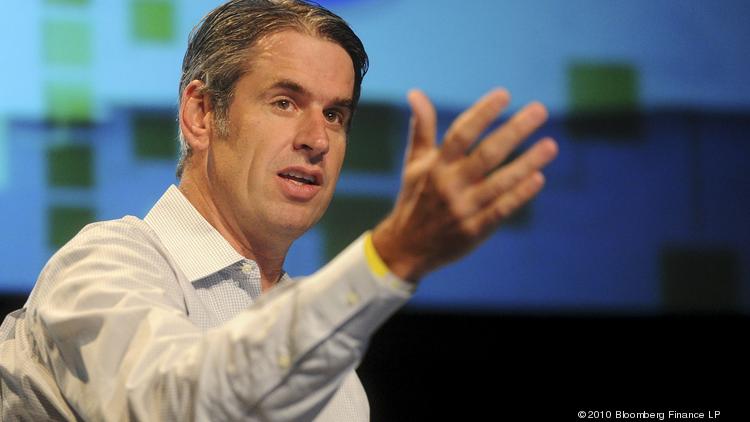
Bill Gurley, a general partner at the Benchmark venture firm, sounded another alarm Thursday night about soaring valuations of VC-backed businesses.
Enlarge

bloombergbill-gurleybenchmark-750xx3000-1688-0-171

Bill Gurley, a general partner at the Benchmark venture firm, sounded another alarm… more

Venture investor Bill Gurley sounded another warning about the high valuations at venture-backed companies in an overnight tweetstorm on Thursday.

Volatile global stock markets are going to put pressure on CEOs at the growing crop of VC-backed businesses known as “unicorns” that are valued at $1 billion or more, the Benchmark partner said.

That is going to increase pressure to produce a profit or show how one will come, Gurley said, tweeting,”Which Unicorn entrepreneurs/CEOs are prepared for such a shift? Who can adjust quickly? Can you get to profitability on your last round? Have you even considered such a reality?”

This isn’t the first time that Gurley has warned of a pending correction in soaring valuations that profitless venture-backed companies have been getting. He predicted in an appearance at South by Southwest in March that we may see some dead unicorns in 2015.

The shift in focus by public investors to concerns over profits from excitement about rapid growth is a key reason that tech IPOs slowed dramatically since early last year. A number of venture-backed companies that had been expected to go public by now have instead raised IPO-sized funding from late-stage investors at lofty valuations.

Investment research firm CB Insights reported this week that the number of unicorns in the world has grown to 123 and they have a combined valuation of $469.1 billion. It added that their aggregate worth tops the valuation of every company on the Nasdaq 100 except for Apple, which is valued at more than $660 billion.

But LinkedIn co-founder and Greylock Partners VC Reid Hoffman argued in a blog last weekend that, while some valuations are certainly too high there, there are good reasons to believe that others will be validated eventually on Wall Street. He wrote that the term “unicorn” has created a mistaken belief that these valuations aren’t real.

“While the metaphor may put an implied cap on the number of billion-dollar companies that can credibly exist, VC firms and other investors are betting on technology, not metaphors,” Hoffman wrote in a blog posted to LinkedIn over this past weekend.

Gurley’s not buying that, though, apparently. He points to big drops in some prominent tech stocks and on Chinese markets in the past six weeks.

“The bottom line is that global tech valuation multiples are compressing (coming in). Quickly,” he tweeted Thursday night. “One might reasonably assume that this would have an adverse impact on late stage private market liquidity and valuation. I certainly do.”

Read Full Post »

Silicon Valley VC confidence drops for first time in 2 years


A third quarter survey shows the first drop in Silicon Valley VC confidence in two years.

Senior Technology Reporter- Silicon Valley Business Journal

Confidence among Silicon Valley venture capital investors dropped for the first time in two year in the third quarter, according to a new survey.

The report from the University of San Francisco is the latest sign of nervousness among VCs as startup valuations hit the roof and a growing number of IPOs are underperforming or being delayed.

Among the VC-backed companies that have decided to delay offerings are Los Altos-based Box and Sunnyvale-based Good Technology. Bloomberg reports that Zoosk, GoDaddy and Yodle also may wait until next year.

The survey also comes after various reports indicated strong but slowing venture funding in the third quarter.

The survey managed by Prof. Mark Cannice asked 33 VCs in the region to rank their confidence on a five-point scale, with one being low and five being high.

The third quarter index came in at 3.89, which is still relatively high, but is down from the 4.02 registered in the second quarter. It is the first drop recorded since early 2012.

“The break in the upward trend could indicate slowing momentum going forward as the VC confidence reading is future oriented,” Cannice wrote in his report.

Some prominent VCs, including Bill Gurley of Benchmark and Marc Andreessen of Andreessen Horowitz, have publicly warned startups to be careful not to burn through too much of their cash at this time.

One of the VCs in the survey who is growing more cautious is Robert Ackerman of Allegis Capital.

“While the engine of innovation is running at full speed, there is considerable risk of overheating, particularly in consumer sectors,” he said. “The excess of capital available to these companies is inflating both valuations and their wage costs. The laws of gravity remain universal and, at some point, we can expect to see a reconciliation between hype and hope.”

Jon Soberg of Expansive Ventures said, “The ‘bubble’ talk has grown louder, especially discussion about high valuations and burn rates. I expect VCs will be more conservative in the coming months and will fulfill the predictions of things slowing down. I still see great innovation and opportunities, and I expect that we will continue to see great companies being built and scaled, but possibly with a little lower valuations.”

An interesting twist may be that as venture-backed companies wait longer to exit through an IPO or acquisition, they become more vulnerable to shifting global macro-economic factors.

“With market demand lagging in China and in most of Europe, many companies are finding it difficult to forecast 2015 international sales,” Kurt Keilhacker of Techfund Capital said. “As a result, many U.S. companies are forecasting modest growth with the headwinds of softening demand internationally and an appreciating U.S. dollar.”

Despite signs of weakening exits, a number of the VCs in the survey remain confident.

Venky Ganesan of Menlo Ventures said, “The major trends driving entrepreneurial growth remain intact — mobile and social for consumers; cloud and Big Data for enterprises. The world we live in is being refashioned by these trends and we are in the second inning of the game. There will be some short term perturbations and some of the excesses we see in certain sectors will get curtailed, but the long term secular trend remains intact.”

Click here to subscribe to TechFlash Silicon Valley, the free daily email newsletter about the region’s founders and funders.

Cromwell Schubarth is the Senior Technology Reporter at the Silicon Valley Business Journal.

Read Full Post »

Ericsson buys majority stake in cloud startup Apcera

derek-collisonapcera-304xx267-400-67-0
Ericsson has taken a majority stake in San Francisco-based Apcera, which s led by CEO Derek Collison

Ericsson said it is buying a majority stake in Apcera, a software startup whose cloud-based software helps customers control their computing resources.

The San Francisco company led by CEO Derek Collison had raised about $7 million since it was founded in 2012. Collison is a former Google Inc. executive who also designed cloud software while at VMware Inc.

The amount of money invested in the deal by Swedish networking giant Ericsson was not disclosed.

Ericsson is one of the legacy networking equipment providers who are trying to find ways to get in on the move to accessing programs and data in the cloud instead of on site. Its sales have stalled for the past two years.

Apcera has more than 20 employees and said it will continue to operate under its current name as a standalone company. The all-cash deal is expected to close in the last quarter of this year.

The company’s investors include True Ventures, Kleiner Perkins Caufield & Byers, Rakuten Inc., Andreessen Horowitz and Data Collective.

Click here to subscribe to TechFlash Silicon Valley, the free daily email newsletter about the region’s founders and funders.

Cromwell Schubarth is the Senior Technology Reporter at the Silicon Valley Business Journal.

Read Full Post »


Rachel Chalmers of Ignition Partners warns founders that VCs really aren’t their friends.


Senior Technology Reporter- Silicon Valley Business Journal

Pity the venture-backed startup founder. That’s the conclusion you might draw from pair of blogs posted this week.

“Why your company should avoid venture capital,” was the headline on the post from Pittsburgh-based growth consultant Andy Birol.

“Five reasons not to raise venture capital,” was the theme of a blog from Rachael Chalmers, the IT analyst turned VC at Ignition Capital in Palo Alto.

Birol’s advice seems focused on entrepreneurs that probably aren’t building the kind of businesses VCs would be interested in anyways. It’s often better to focus on pleasing customers than satisfying the demands and priorities of venture investors, he says.

“Turning to venture capital for money to grow your business is sort of like going to a bar looking for someone to marry. The longer the night goes on, the clearer it is that most people you meet have short-term objectives,” Birol writes.

Chalmer addressed Silicon Valley entrepreneurs more directly.

“The seductive narrative of Silicon Valley stars a genius-hero who goes on a journey, overcomes myriad obstacles, has a flash of insight and is rewarded by wise and benevolent investors with Series A funding. This narrative is bullshit, but it’s everywhere.”

The point of both blogs is that venture funding isn’t the best source of capital for a lot of businesses and getting VC backing is far from being a guarantee for success.

Chalmers estimates that of the 1,000 VC-backed enterprise startups she encountered in 13 years as an analyst, only eight got all the way to an IPO. A total of 188 were acquired and “28 of them failed so hard they don’t even fog a mirror any more.”

A report this week from CB Insights provides even more data on this point. Of all the VC-backed companies that raised seed money in 2009, 75 percent are orphaned, dead or became “self-sustaining.”

This last group is often termed, disdainfully, by VCs as “lifestyle businesses.” That means that there is probably a business that will spport the founders and their families but will never scale.

About 21 percent of the Class of 2009 were acquired. The rest, only about 4 percent, are still around.

The report and the two blogs make the point that the chances of success as a venture-backed startup aren’t great. They may even lead readers to wonder if things have gotten worse in that regard.

But very few VCs I have dealt with suffer fools gladly who think that startup success is easy. They actually go out of their way, as Chalmers does, to dissuade founders from that idea.

The reality is that it has never cost less to build a tech startup and it hasn’t been considered this cool to be a founder than during the tech bubble of the 1990s.

But the facts show that extremely few of these startups are likely to survive, and that doesn’t seem to be anything particularly new. It just runs counter to popular myth.

Cromwell Schubarth is the Senior Technology Reporter at the Business Journal.

Read Full Post »

« Newer Posts - Older Posts »