Feeds:
Posts
Comments

jpeg-1

655 Fifteenth Street, NW
Suite 810
Washington, DC  20005
(202) 756-8211

http://www.lannyjdavis.com
Purple Nation

March 22, 2013

A Wrong Purple Moment for Obama and Boehner

By Lanny J. Davis

http://thehill.com/opinion/columnists/lanny-davis/289453-a-wrong-purple-moment-for-obama-boehner

http://www.newsmax.com/LannyDavis/Purple-Obama-Boehner-budget/2013/03/21/id/495669

http://dailycaller.com/2013/03/20/a-wrong-purple-moment-for-obama-and-boehner/

I have been writing this “Purple Nation” column for a long time, waiting for the “purple moment” when President Obama and Speaker John Boehner (R-Ohio) would agree on an important position on the budget and deficits. Little did I know that when it finally happened, I would be disappointed, to say the least.

“We don’t have an immediate crisis in terms of debt,” President Obama told ABC “Good Morning America” host George Stephanopoulos, in an interview that aired March 13. “In fact, in the next 10 years it’s gonna be in a sustainable place.”

Then a day or so later, Boehner said he agreed with the president!

Instead of cheering this as a magic purple moment, I could only think of this metaphor, which I believe is apt: There’s a ticking time bomb in your living room, you know the bomb will certainly explode in 10-15 years, and you choose only to reassure your family, “There is no ‘immediate’ danger.”

That is pretty much the situation we face today. Here are a few scary facts:

According to a CNN report, the nonpartisan and highly respected Congressional Budget Office projects the national debt will continue to rise over the next 10 years by a total of $7 trillion. Recently, Alan Simpson and Erskine Bowles pointed out that even if we were to accept the president’s budget proposals, and experienced an optimistic rate of growth over the next 10 years, the national debt would still be above 73 percent of gross domestic product by 2023 — a danger zone for most economists. And, they add, this scenario “leaves no margin of error if the economy grows slower, no wiggle room in case politicians are fiscally irresponsible in the future [shocking thought!], and no flexibility in case of a war, recession or natural disaster.”

According to Simpson-Bowles, at the current rate of spending and revenues, there will be sufficient tax revenues to be able to finance only interest payments on the debt, Medicare, Medicaid and Social Security. Every other federal activity — from national defense to homeland security to transportation and energy — will have to be paid for with more borrowed money. Interest on the national debt could rise to nearly $1 trillion by 2020.

Talk about ticking time bombs: given that the baby boomer generation is already coming of age at 65 and older, if we do nothing to restructure the Social Security, there will be no money at all left in the trust fund 25 years from now. That means an immediate cut in benefits of more than 20 percent, affecting everyone today who is 40 years old, and for those who are younger, the cutbacks grow more and more severe.

Add to that the increasing cost of Medicare substantially above the rate of growth in projected revenues for the next 10 years, causing further combustion power to the ticking time bomb. Simpson reminds us that ten thousand Americans each day are turning 65 and that life expectancy is 78.1 years today, and in five years will be 80. “This is madness,” he says. “Who is kidding who? This will eat a hole through America.”

I have written in this space often that the run-up of the national debt in proposals made by the president and leaders of both political parties is the moral equivalent of the following: If you travel around the world, use credit cards to pay for all your airfares, hotels and fancy restaurants, return home after the trip and dump all the credit card receipts on your children’s laps and tell them to pay, that is downright wrong. And I say that the word immoral is the right word.

Why don’t the president and Boehner also agree that assuring today’s generation that there’s no “immediate” deficit crisis, while dumping our credit card bills on our children’s and grandchildren’s laps in the next 10-15 years, is wrong — plain immoral?

And why don’t they both announce support for passage of all the Simpson-Bowles Commission recommendations, supported by a bipartisan vote of more than 60 percent, including liberal Democratic Sens. Dick Durbin (Ill.) and Kent Conrad (N.D.) and conservative Republican Sens. Tom Coburn (Okla.) and Mike Crapo (Idaho)?

That would be the right thing to do, the moral thing to do, the purple thing to do.

#  #  #  #  #

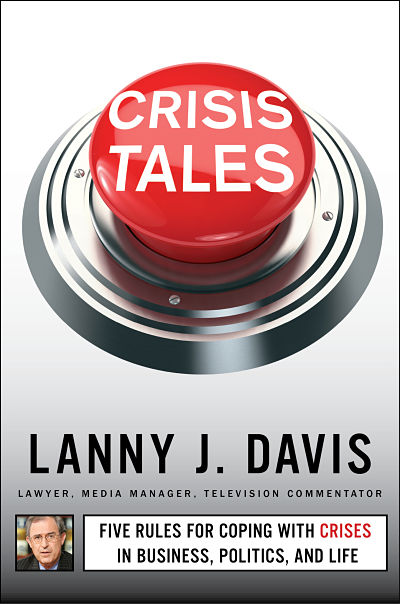
Davis, a Washington attorney and principal in the firm of Lanny J. Davis & Associates, specializing in legal crisis management and dispute resolution, served as President Clinton’s special counsel from 1996-98 and as a member of President Bush’s Privacy and Civil Liberties Oversight Board from 2006-07. He currently serves as special counsel to Dilworth Paxson and is the author of the book, Crisis Tales: Five Rules for Coping With Crises in Business, Politics, and Life, that was published by Simon & Schuster on March 5, 2013.

www.lannyjdavis.com

jpeg

martinzwilling_136Martin Zwilling Contributor

A startup begins with a great idea, but all too often, that’s where it ends. Ideas have to be implemented well to get the desired results. Good implementation requires a plan, and a good plan and good operational decisions come from good people. That’s why investors invest in entrepreneurs, rather than ideas.

People and operational excellence have to converge in every business, large or small. Microsoft found this out last year when their market capitalization, once at $560 billion in the year 2000, had fallen to $219 billion, allowing them to be passed by Apple at $222 billion, who grew from $15.6 billion during the same period. Both had access to the same technology, people, and market.

So what could have happened here? I found a good summary of the relevant keys to business operational excellence in a new book by Faisal Hoque, called “The Power of Convergence.” His focus is on repeatable practices to maximize business opportunities in large companies, but I’m convinced that these apply equally well to startups:

1.  Clearly define your value chain. Your value chain consists of customers, partners, vendors, internal systems, and your own team. Make sure you understand this chain, as well as market dynamics, to drive operational innovations and every decision. Apple has been able to innovate at an amazing pace to define and meet new market opportunities.
2.  Visualize abnormal or suboptimal performance. Recognizing and understanding deviations enables a startup or any business to take corrective action quickly. This requires executives and a team that understands the parameters, and is focused on customers, quality, and continuous improvement.
3.  Facilitate the power of your team. Startups need to empower their people to take action in the absence of orders. That doesn’t mean abdication in setting corporate policies, which provide parameters to ensure that individuals have to ability to act collectively in the company’s best interest. Steve Jobs has a committed team.
4.  Communicate effectively with the team and customers. Communication is a challenge in any organization, but it’s a particular challenge when you’re working in a startup, where customers, products, processes, and the team are new. Most founders forget that communication becomes exponentially more difficult as the business grows.
5.  Measure value flow and performance. Measuring performance may seem self-evident, but many entrepreneurs mistake this task as a point-in-time or a one-time event. In operationally excellent startups, performance measurement is an ongoing effort throughout the process chain, not just at the outcome.
6.  Define response mechanisms. Anticipating and planning for worst-case scenarios, and having a Plan-B, will enable the quick-response and pivots required to put a startup back on track. Metrics are required for ensuring the return to a known good baseline.
7.  Maximize technology architecture and standards. Continuous innovation to maintain your competitive advantage does not mean that you can ignore current architectures and standards. These must always be leveraged produce optimal intended product outcomes.
What every business needs is a convergence of business and technology elements to optimize return and competitive positioning. All too often, entrepreneurs posit a new technology or idea, without understanding that a successful business is a never-ending process of adapting and improving all the elements in a business – especially business model, processes, and people, as well as technology.

Apple, with Steve Jobs, has demonstrated a rare convergence of technology, market understanding, business process, and people. Are you focused on all the right execution principles in your startup to do the same?

Crisis Brings Out the Crowds – Lanny J. Davis and friends
March 5-14, 2013

Three-City Book Tour & Media Visits Focus on Crisis Tales
Below are some photos, video and links that highlight the past week in which multifaceted attorney, crisis manager, consultant, media commentator and author Lanny J. Davis, former White House special counsel, debuted his latest book, Crisis Tales: Five Rules for Handling Scandal in Business, Politics and Life.

jpeg

In New York , special guests included former Secretary of State Hillary Clinton. President Bill Clinton couldn’t attend the party in person, but he sent along a special note that was read for guests:

Many people specialize in dealing with the media, understanding politics, or navigating the legal system. Lanny is unique in his mastery of all three.

He’s one of America ‘s most skilled and experienced advisors, and the fact that he has so many friends on both sides of the aisle is a testament to his fair-minded approach to problem solving and his remarkable record of success.

Congratulations to Lanny on the publication of Crisis Tales, and best wishes to all for an enjoyable evening.

Click HERE to read the full note from President Clinton.

jpeg-1

6 Life Lessons from the Man Paid
to Do Damage Control for the Stars
by Courtney Shea, The Globe and Mail

This Week in Print…for Lanny J. Davis
Yahoo! News
NBC’s Weekend Today
The Washington Examiner
Bisnow
Business Week
The Washingtonian
Bloomberg.com
Philly.com
Roll Call
The O’Reilly Factor
The Washingtonian
The Hill
Pittsburgh Tribune-Review
This Week in TV…
CNBC Kudlow Report
FOX Your World with Neil Cavuto
NBC Weekend Today
Fox News The O’Reilly Factor
CNN Piers Morgan Live
MSNBC Morning Joe
FOX Fox and Friends
In New York, special guests also included former RNC Chairman Michael Steele , cohost of America’s Newsroom on Fox News Bill Hemmer and Inside Edition’s Special Correspondent Rita Cosby; in Philadelphia former PA Governor Ed Rendell; and in DC Congressman Elijah Cummings, Congressman Darrell Issa, former United States Solicitor General Ted Olson , founder and president of Americans for Tax Reform Grover Norquist (pictured), Congressman Chaka Fattah, Congressman Rob Andrews and C-SPAN, which covered the event from start to finish.

Click HERE for more photos from the parties.

Congratulations to Lanny Davis – a true Professional

gp_nl_header

San Francisco, March, 2013
Successful “Date Certain M&A” of Medical Device company, its Assets and Intellectual Property
Steven R. Gerbsman, Principal of Gerbsman Partners, Kenneth Hardesty, Philip Taub and  John Andreadis members of Gerbsman Partners Board of Intellectual Capital, announced today their success in maximizing stakeholder value for a venture capital backed medical device company. This company was in the medical device skincare space.

Gerbsman Partners provided Crisis Management and Investment Banking leadership, facilitated the sale of the business unit’s assets and its associated Intellectual Property. Due to market conditions, the board of directors made the strategic decision to maximize the value of the business unit and Intellectual Property. Gerbsman Partners provided leadership to the company with:

1.  Crisis Management and medical device domain expertise in developing the strategic action plans for maximizing value of the business unit, Intellectual Property and assets;
2.  Proven domain expertise in maximizing the value of the business unit and Intellectual Property through a Gerbsman Partners targeted and proprietary “Date Certain M&A Process”;
3.  The ability to “Manage the Process” among potential Acquirers, Lawyers, Creditors Management and Advisors;
4.  The proven ability to “Drive” toward successful closure for all parties at interest.
About Gerbsman Partners

Gerbsman Partners focuses on maximizing enterprise value for stakeholders and shareholders in under-performing, under-capitalized and under-valued companies and their Intellectual Property. Since 2001, Gerbsman Partners has been involved in maximizing value for 76 Technology, Life Science, Medical Device and Solar companies and their Intellectual Property and has restructured/terminated over $810 million of real estate executory contracts and equipment lease/sub-debt obligations. Since inception in 1980, Gerbsman Partners has been involved in over $2.3 billion of financings, restructurings and M&A transactions.

Gerbsman Partners has offices and strategic alliances in San Francisco, Boston, New York, Washington, DC, McLean, VA, Orange County, Europe and Israel.

Steven R. Gerbsman
Principal
Gerbsman Partners
Phone: 415.456.0628
Fax: 415.459.2278
Cell: 415.505.4991
steve@gerbsmanpartners.com
thegerbs@pacbell.net
http://www.gerbsmanpartners.com

BLOG of Intellectual Capital
http://blog.gerbsmanpartners.com
Skype: thegerbs

header_02The Marlinspike* CEO by Jim McHugh, Consultant, Board Member and Member of Gerbsman Partners Board of Intellectual Capital
 

An in-depth management guide
for C-Suite executives, investors and advisors.

What to expect: Pivotal proven tactics to boost business performance, sharpen strategic focus and create lasting shareholder value.
Plus: Technology Telltales -Technology recommendations for entrepreneurs
Occasional networking events
Nautical references
Humor

  March 2013

CEOs:  Do You Run Your Company Well?

Here’s the question phrased a bit differently…What key elements turn your company into:
1.  an attractive acquisition candidate
2.  a great, fun place to work!
3.  a valuable asset for all shareholders
There’s no need to create your own list of key elements because the next section of this newsletter not only has the list of key elements called The Run The Company Well List, but there are suggestions on how to use it.

The Run The Company Well List
My list has fifteen key elements that encompass the business model, planning, leadership, people, customers, products/services, finances, operations and advisors. Does (insert your company name here) have:
1.  a clear, focused, comprehensive business model
2.  a cohesive and well-tested growth strategy
3.  an outstanding leadership team that works well together
4.  a problem solving culture that is based on trust, accountability and fun
5.  a motivated, loyal, skilled workforce that is well treated and compensated fairly
6.  unique, high quality products and/or services
7.  innovative go-to-market tactics
8.  happy customers, whose needs are well understood
9.  a diversified (not concentrated) collection of profitable customers
10. a strong and defensible competitive position
11. a balance sheet that is rock solid
12. a P&L that shows consistent growth, high margins and a justifiable expense structure
13. lean processes, effective information systems, strong financial controls
14. well cared for fixed assets
15. great advisors: Board of Directors and/or CEO Peer Group plus outside professional confidants

Today I’d like to dig deeper into #3 and #15 by reviewing the OPPOSITE of having great leadership and great advisors. What if an organization has a significant, persistent problem within the organization’s leadership ranks? I call this condition being Stuck in a Ditch. Getting Stuck in a Ditch is a result of having one or more of these 6 challenges:

1.  Weak, uninspiring leadership: The CEO does not have the necessary vision, leadership or management skills to direct the company.
2.  No respect: The CEO does not command the respect of the organization.
3.  The CEOs leadership style=strange behavior: The CEO’s (or could be the dominant, controlling shareholder) behavior causes constant anxiety throughout the organization.
4.  Corporate governance is broken: There is continuous tension about the ‘lack of alignment’ and ‘who we are’.
5.  Meddling: The constant, meddling actions of the controlling, outside investors in the day-to-day affairs of the organization have a direct, negative impact on the organization’s performance.
6.  No hands on the wheel: A good governance framework does not exist. There is no active Board of Directors or Board of Advisors; if one does exist, and it is only ceremonial in nature, that is almost the same (or worse) than not having one at all.

Any combination of these six issues clearly puts a major dent into The Run the Company Well List. People are perceptive; each one of these six situations is obvious to the employees. These Ditch conditions can lead to indecision, constant bickering or fighting and prevent the organization from moving forward with conviction towards common goals.

How can you put The Run The Company Well List to use in your company?

Lists can create conversation and discussion. More important,they can initiate ACTION.

Suggestions on how to use the list:
1.  As your personal pocket guide while you prepare your company for sale
2.  A roadmap to kick off a 2013 operational improvement plan
3.  An ongoing discussion tool with your Board of Directors/Advisors
4.  The agenda for an offsite meeting with your senior leadership team
5.  A quiz for the WHOLE COMPANY: Give it to all your employees, have them answer Yes, No, or Not Sure for each item, tally the results and publish the findings.
Download The Run The Company Well List by clicking HERE

* What is a ‘marlinspike’?


*The marlinspike is a nautical implement that is used to unravel nautical lines. It is also used to sew the lines together to join them, creating greater strength, or to create useful or decorative items from nautical line.

Detangling and sorting through the complex issues in a STUCK company is similar to using the marlinspike to detangle, sort through, and weave together a much stronger and long-lasting nautical line.  Whether trying to achieve a more secure future for a boat, or a company, the marlinspike approach may be needed. Jim enjoys the sea, its wildlife, and kicking around boats and marinas.

Connect with Jim

With a name like McHugh,
I couldn’t resist sharing
some March 17 shenanigans

CEOs: Do you need an objective look at your Run The Company Well List?

Nothing beats human interaction.
Here’s Jim’s offer for March:
1 Hour of Free CEO Coaching by Jim McHugh
by phone or online video chat (Skype or Google Hangout)
No strings attached
To contact Jim, go to steve@gerbsmanpartners.com and I will forward to Jim McHugh

The Marlinspike CEO is written by Jim McHugh. Jim is an Entrepreneur, CEO Coach, Optimist, Instigator of Positive Change…and Fixer of Stuck Companies.
CEOs, family owners, investors and Directors enlist Jim to be their ‘fresh pair of eyes’ and confidant.

Jim is also a long time friend and a person of high ethics and integrity.