Feeds:
Posts
Comments


A special Zoom talk and Q&A for J-Ventures portfolio companies and LPs with our community member: 


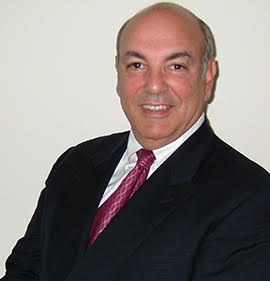
Steven R. Gerbsman
Crisis/Turnaround CEO/Restructuring Professional, Investment Banker and Angel Investor


Identifying the early warning signs and maximizing value of distressed portfolio companies
A talk delivered by Steven R. Gerbsman of Gerbsman Partners on potential pitfalls of startups, emerging growth, and middle market companies. This presentation is currently being used at the Stanford University Engineering and Business Schools via the Stanford Technology Ventures Program (STVP) and Stanford Center for Professional Development (SCPD).


Details

Monday, April 20, 2020
1 p.m. PT

Join Zoom Meeting
https://zoom.us/j/6479063661?pwd=Y2NuSjhZNVpvRnRBQ2ZGSTlBMUdxQT09

Meeting ID: 647 906 3661
Password: 1016

Looking forward to seeing you!


Steven R. Gerbsman is an internationally recognized Crisis/Turnaround CEO/Restructuring Professional, Private Investment Banker and Angel Investor who has been involved in maximizing enterprise value, stakeholder and shareholder value in a broad variety of industries. He has worked with a wide spectrum of senior and junior lenders, bondholder groups, venture capital and private equity sources, private investors and institutional groups. Mr. Gerbsman has over 51 years of senior management, marketing, sales and finance experience and has been involved in various business and investment ventures as an office, director, consultant and investor, both in the US and internationally.

Since 1980, he has been in the business of maximizing enterprise value for highly leveraged, under-valued, under-performing and under-capitalized technology, digital marketing, life science, medical device, cyber security, fuel cell and solar energy companies and their Intellectual Property, as well as assisting technology, digital marketing, cyber security and medical device Intellectual Property companies with access to capital markets, strategic alliances, M&A, distribution of content and licensing.

To date, Mr. Gerbsman has been involved in over $2.3 billion of restructuring, financing and M&A transactions, terminating/restructuring in excess of $810 million of real estate, sub-debt and equipment lease executory contracts and since 2001, has maximized enterprise value for over 109 companies and their Intellectual Property. In 2000, he also began focusing on Israeli and European technology and life science companies, with the objective of providing access to the US capital markets and developing strategic alliances, M&A and licensing opportunities for them.

J-Ventures is the first primarily Global Jewish VC. Based in Silicon Valley J-Ventures acts as a “Mensch empowered VC Fund” with unique access to deals, experts and markets across different global communities. By building an engaging community of top investors from different GEOs we connect the current fragmented Jewish communities and give back to the community to support unity. 


Copyright © 2020 J-Ventures, All rights reserved.
You are receiving this email because you opted in to receive updates from J-Ventures.
If you no longer wish to receive emails from us, you can unsubscribe from this list or update your preferences at any time by contacting our team at info@j-ventures.com.


WHY BUSINESSES SHOULD ACCELERATE THEIR COMMUNICATIONS NOW

“Success is not final, failure is not fatal; it is the courage to continue that counts”.

                                                                          Winston Churchill

I’ve always loved this quote from a man I have long admired. I’ve referred to it many times whenever business gets especially difficult. There has never been a more appropriate time to think of Sir Winston’s words.

Counter-intuitive– In golf it is called “counter-intuitive”. Swing hard and the ball goes nowhere. Swing easily and the ball goes a mile.

In crises the natural inclination for most businesses is to cut back on every expense, marketing communications chief among them. In my 40+ years in communications I’ve seen too many CEO’s adopt a bunker mentality; hunker down, avoid costs and whatever you do, do not communicate with anyone until the trouble passes. This approach is wrong and can cause lasting damage.

In fact, now is absolutely the right time to increase your communications, but in the most strategic and cost-effective way possible. Here’s the way to go about it:

Build a Plan

Step 1- Prioritize your audiences; customers/clients, employees, vendors, federal/state/local governments, and the step

Step 2- Target Messaging. What are the three most important messages you want to communicate to each audience. Whatever you do be authentic, transparent and sensitive

Step 3- Communications Techniques. Determine, what are the best ways to reach each of your target audiences. Include both traditional and digital approaches

The Good NewsYou can build a communications program today at very little cost and with great effectiveness.

What You Can Do Today

  1. CEO Communications- This is by far, the most important step for any CEO. People are starved for leadership. Those who reach out and communicate to target audiences with compassion, concern, and calm will stand out. Authenticity, transparency and frequency are what counts now. CEO’s who do this well will not only build their businesses brand but their own as well. CEO’s will become recognized as being among the new generation of leaders. Mario Cuomo, Governor of New York State and Jamie Dimon, CEO of Chase Bank are prime examples great communicators.
  2. Digital Communications- Businesses can reach their target audiences through a variety of effective and low cost platforms. Start with LinkedIn. If your business has pages on Facebook, Instagram, Snap, etc., use them.
  3. Broadcast- Business news networks such as CNBC as well as general news outlets from MSNBC to FOX need interviews with CEO’s who can talk articulately about business issues impacting governmental policies to consumers
  4. Advertising- For those who have the budget consider both digital and traditional advertising outlets. But messaging should change frequently to make sure you are current. Charles Schwab, Invesco and Progressive Insurance are companies who continue to advertise but have correctly changed their message to reflect current times.

Now is the time for CEO leadership. Take the counter-intuitive route. Communicate, Communicate, Communicate.

Don Middleberg

Don Middleberg is regarded as one of the nations leading public relations executives, renowned for developing some of the most creative and powerful communications programs for such companies as American Express, Consumer Reports, Gartner, IBM, Reuters, and United Airlines.

Middleberg and Associates, founded in 1989, was named “Best PR Agency of the Year” in 1999. In 2000, the company became Euro RSCG Middleberg when it was acquired by Euro RSCG, the communications division of Havas, the world’s sixth-largest communications group. 

In 2009 Don Middleberg merged his second agency, Middleberg Communications, with Laundry Service, a digital marketing agency. Within six years the firm grew from 3 employees to over 600 in 4 countries and was named to Ad Age’s 10 Best Digital Agencies. In 2016 Middleberg sold this agency to Wasserman Group. Don is currently providing marketing communications consulting for several organizations in consumer technology and B2B.

A noted author and lecturer on public relations, Don, together with Professor Steve Ross of the Columbia University Graduate School of Journalism, co-authored the groundbreaking study, “The Media in Cyberspace.” Don is regularly called upon for commentary by numerous magazines and newspapers, and has appeared on CNBC, C/Net, CNN, and National Public Radio.


Successful ‘Date-Certain M&A’ of Dune Medical, its assets and intellectual property

Gerbsman Partners is pleased to announce the successful completion of maximizing the value of assets and associated intellectual properties of Dune Medical and its Israel operation.

Due to market conditions and trends, the company and the senior secured lender made the strategic decision to maximize the value of the business unit and its intellectual properties.

Gerbsman Partners – led by Steven R. Gerbsman, Principal and Kenneth Hardesty (CEO in Residence)– provided the company and senior lender with financial advisory leadership through its proprietary ‘Date-Certain M&A Process’, facilitated the sale of the company’s business assets, its associated Intellectual Property and the closing of the sale.

Specifically, Gerbsman Partners provided leadership with:

  1. Business consulting and investment banking domain expertise in developing strategic action plans.
  1. Implementing its proprietary ‘Date-Certain M&A Process’ in order to maximize value of assets and intellectual properties.
  2. “Managing and guiding the process” among potential acquirers, lawyers, creditors, advisors, senior lenders, vendors, creditors, as well as all stakeholders of interest.

About Gerbsman Partners

Gerbsman Partners focuses on maximizing enterprise value for stakeholders and shareholders in underperforming, undercapitalized and undervalued companies and their intellectual properties. Since 2001, Gerbsman Partners has successfully maximized the values of 109 companies in a wide and diverse spectrum of industries, ranging from technology to medical device/life science to cyber security, to name only a few.*

In the process, GP has successfully restructured/terminated over $810 million of real estate executory contracts and equipment lease/sub-debt obligations, and has assisted in over $2.3 billion of financings, restructurings and M&A transactions.*

Gerbsman Partners has offices and strategic alliances in San Francisco, Orange County, Boston, New York, Washington DC, McLean, VA, Europe and Israel.

*For further information on Gerbsman Partners expertise and industry experience, please request our company profile here.

Steven R. Gerbsman

steve@gerbsmanpartners.com


THE GREAT RESTRUCTURING OF 2020


What we know so far!

  • The Chinese Coronavirus has fundamentally changed the world and United States economies with unprecedented speed.
  • In some cases, those changes will be temporary. In many cases, those changes will be permanent.
  • The unintended and unforeseen consequences of the crisis will ripple through all aspects of the world and United States economies for many years.
  • The economic relationships between debtors (individuals, companies, governments) and creditors (vendors, lessors, lenders, employees) and owners (equity holders) are now fundamentally unbalanced, just as has occurred in all previous financial crises.
  • As in the Dotcom Crash, the 9/11 Crash and the 2008 Crash, those economic relationships will be rebalanced by renegotiation, sale, bankruptcy and liquidation, so that assets are redeployed, asset value is monetized and maximized and economic activity can continue. We know that there will still be airlines, travel companies, restaurants, oil companies, auto manufacturers, etc. We do not know which companies will survive or who will be their owners. For example, Boeing will likely still exist, but Boeing equity and debt holders may be hurt severely.
  • The world has survived far worse and has revived strongly. For example, World War I, followed by the Spanish Flu, followed by the huge economic growth of the 1920’s. Humans are wired to adapt to and to overcome hardship. We still have the land, resources, infrastructure, intellectual property, technology and talent that we had a month ago. Huge economic dislocation can also spur huge creativity, energy and innovation.
  • There will be major economic losers, but also major economic winners.
  • The United States is self-sufficient in food and energy and is the largest market and the greatest economic and political safe haven in the world. We are the best-positioned country in the world to emerge stronger than before.

What we do not know!

  • How bad the Chinese Coronavirus will get.
  • How long it will take for it to resolve. For example, the 1918 Spanish Flu came in waves and there is high expectation that the coronavirus will reappear this fall.
  • How bad the economic situation will get before it stabilizes, both in the short term and long term
  • The effect of historically unprecedented government economic stimulation and significant increase in the deficit.
  • The availability of cash to sustain under-performing companies and businesses.
  • How young CEO’s, investors, bankers will react to a situation that they have not seen or lived through before.

What happens next?

  • Everyone we know is sheltering in place and is shocked at the magnitude and speed of this world change. People need time to adjust to a radical new reality, and they have not yet had that time.
  • It is almost impossible to make any future predictions, however the most immediate business decisions will be critical given the extreme level of uncertainty.
  • We expect that the world health and economic situation will become clearer over the next few months. We expect to see a giant wave of economic restructuring that will last several years.
  • Early business crises will be driven by lack of cash. Based on our experience in several previous economic crashes, the speed with which business owners and managers face reality, preserve, protect and forecast cash and take effective action will determine which businesses survive and which die.


WHAT YOU CAN DO AS A BOARD MEMBER, INVESTOR, LENDER OR STAKEHOLDER … 

  • It is critical for companies, investors and lenders to face reality and act quickly. When things are going bad, waiting seldom improves the situation. In over 40 years of crisis management and restructuring experience we have never seen a board of directors act too quickly when faced with a crisis. We have all too frequently seen a board act slowly or not at all.
  • Implement cash flow, receivables and inventory reporting so that you are alerted to problems early.
  • Gerbsman Partners believes that companies, investors and lenders should to call for assistance early. The earlier professionals can get involved in the process, the better the potential outcome in maximizing enterprise value.  Again based on experience, boards, investors and lenders request assistance only after a company has little cash or is out of cash. Many more options exist to maximize enterprise value if a company has some running room.
  • Focus on the control, preservation and forecasting of cash on a weekly, monthly and quarterly basis.
  • Require “bottoms up” forecasting for all aspects of cash, revenue and expense. Have the CEO and CFO defend all numbers.
  • Hold the CEO responsible and accountable for performance. Re-forecast your business plan based on the reality of “what is” today with large margins for uncertainty.
  • Communicate frequently with all parties at interest. Check that the CEO is providing leadership, motivation and morale to the management team and employees.
  • Review all companies in your portfolio. Identify and define action plans to fix weaknesses now.


! CALL GERBSMAN PARTNERS NOW AND  GET AHEAD OF THE CURVE.

Crisis Management and Restructuring to Maximize Enterprise Value is our Business!


ABOUT GERBSMAN PARTNERS:

Gerbsman Partners focuses on maximizing enterprise value for stakeholders and shareholders in under-performing, under-capitalized and under-valued companies and their Intellectual Property. Since 2001, Gerbsman Partners has been involved in maximizing value for 103 technology, medical device, life science, digital marketing, information & cyber security and solar companies and their Intellectual Property and has restructured/terminated over $810 million of real estate executory contracts and equipment lease/sub-debt obligations. Since inception, Gerbsman Partners has been involved in over $2.3 billion of financings, restructurings and M&A transactions.

Gerbsman Partners has offices and strategic alliances in San Francisco, New York, Virginia/Washington DC, Boston, Europe and Israel.


Steven R. Gerbsman – Principal steve@gerbsmanpartners.com


Robert R. Tillman – Member of Gerbsman Partners Board of Intellectual Capital