Feeds:
Posts
Comments

Posts Tagged ‘boic’

Article from GigaOm.

Meteor Development, the startup behind a hot, new real-time JavaScript framework, has scored $9 million in initial funding from Andreessen Horowitz, sources said. Company co-founder Matt DeBergalis had no comment on the funding news.

Meteor’s framework, as GigaOM reported in April, allows developers building web apps to work in “pure” JavaScript, and use the same APIs on both client- and server-side devices. The Meteor API works everywhere but development occurs on the local laptop with Meteor taking care of data updates and server synchronization. Developers commenting on Github and Hacker News really liked Meteor’s ability to perform “hot pushes,” which update code to users without interrupting their work.

Initial excitement about the framework was soon tempered by Meteor’s use of the General Public License (GPL) but in response to developer pushback on Github and StackOverflow, Meteor turned around and issued the code under the less restrictive MIT public license. That allows development of both open-source and commercial products.

Meteor, based in San Francisco, was co-founded by Geoff Schmidt, a co-author of the Miro web TV platform and co-founder of MixApp; DeBergalis, founder of the ActBlue fundraising platform; Nick Martin, another MixApp co-founder; and David Greenspan, author of Etherpad. The website features rave blurbs by luminaries including Posterous founder Gary Tan and Facebook co-founder Dustin Moskowitz.

Clearly, as evidenced by this funding, Meteor also has new fans among Silicon Valley investors as well.

Read more here.

Read Full Post »

Article from TechCrunch.

Your Powerpoint pitchdeck is so boring. So. Freaking. Boring. Although tech bloggers aren’t sent startup’s actual pitchdecks as often as investors are (thankfully), we’re still walked through them on dreadful, “let me read to you from my Powerpoint” phone calls more often than should be socially acceptable. That’s why when image aggregator Piccsy, which is simultaneously a competitor to Pinterest as well as a top 20 content source for the site,  pinged us to take a look at its pitch deck, we were pleasantly surprised. A pitchdeck that’s actually fun to read? Can such a thing exist?

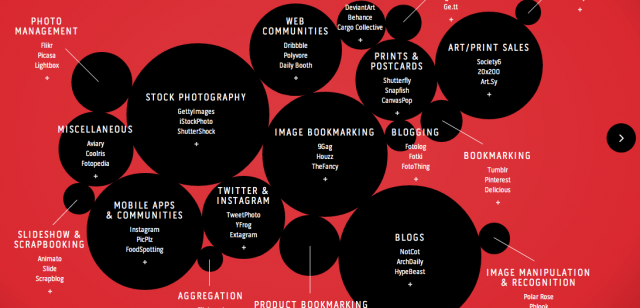
Piccsy.com/investors hosts the company’s public pitchdeck, and it’s a striking, visual representation of the data that would be typically found in bullet-pointed slideshows. The format leads you to wander through content and explore, much like Piccsy itself does. CEO Daniel Eckler admits that he doesn’t even know how to use Powerpoint. “I’ve only ever opened the program once or twice in my life,” he says. But it wasn’t just lack of know-how that led the company to ditch the idea of the traditional deck. As outsiders from Toronto, they wanted to stand out, Eckler says.

“We began with a problem (how to get investors to see our deck) and came up with a solution (create something unique, beautiful, informative, and easy to share), as opposed to going with the status quo,” Eckler explains. “This is conceivably the first thing investors are going to relate to when they see a company. Lots of companies that are innovative in other areas are sticking to an old model with their deck, even though they have the resources (dev/design) to do something special.”

Plus, he adds, a generic, Powerpoint-style deck wouldn’t be right for a site that’s all about discovering beautiful imagery.

For what it’s worth, the novel deck has been working. 50,000 pageviews and 15 inbound investor requests came in over the weekend, and the site got linked on Hacker News (where discussion delved into criticisms over content, however, but not the style.) Said one commenter, “it’s a beautiful presentation. I’m jealous….I’d absolutely pay to get a site like that.”

Say, Piccsy – if that whole image aggregation thing doesn’t work out…

The screenshot above is just a snippet. The full site is here.

Read more on Piccsy at www.piccsy.com.

Read the original article here.

Read Full Post »

Article from Fenwick & West.

Background—We analyzed the terms of venture financings for 114 companies headquartered in Silicon Valley that reported raising money in the first quarter of 2012.

Overview of Fenwick & West Results

  • Up rounds exceeded down rounds in 1Q12, 65% to 22%, with 13% of rounds flat. This showed continued solid valuations in the venture environment, although a small drop off from 3Q11 and 4Q11, when 70% of rounds were up rounds. This was the eleventh quarter in a row in which up rounds exceeded down rounds.
  • The Fenwick & West Venture Capital Barometer™ showed an average price increase of 52% in 1Q12, a decline from the 85% reported in 4Q11, but still a solid showing.
  • We note some weakness in late stage financing (Series E and higher) valuations, where 37% of the financings were down rounds and the Barometer reported only a 12% increase. Series B financings were also not as frothy as they have been, with a Barometer reading of 58%, the lowest since 4Q09, but still very solid.

The results by industry are set forth below. In general software and digital media/internet companies continued to see the strongest valuation increases, with hardware and life sciences lagging.

Overview of Other Industry Data

  • Venture valuations were healthy, but investment was down.
  • M&A valuations were up, but the number of deals was down.
  • Venture fundraising was mixed, but corporate venture investing was up.
  • IPOs were up, and the passage of the JOBS Act is a further encouraging signal for the public market, but continuing global financial uncertainty, especially in Europe, is a concern.

So what is the take-away? Venture fundraising continues to be problematic, and likely contributed to the decreased venture investment the last two quarters. However with IPOs improving, and interest rates still extremely low, there is reason to believe that venture fundraising will improve, if the global economic environment doesn’t further increase risk averseness. The M&A market slowed a bit in 1Q12, possibly to give participants a chance to evaluate the improvement in IPOs, and its possible effect on valuations, but corporate America has plenty to spend, evidenced by their increasing participation in venture investment. And the areas of entrepreneurial focus and innovation are broad, with mobile, cloud, security, big data and of course social media all attracting substantial attention.

Venture Capital Investment.

  • Venture capital investment in the U.S. declined for the second quarter in a row, with the decline evident in most major industry segments, including internet/digital media.
  • Dow Jones VentureSource (“VentureSource”) reported $6.2 billion of venture investment in 717 deals in 1Q12, a 16% decline in dollars from the $7.4 billion invested in 803 deals in 4Q11 (as reported in January 2012).
  • The PwC/NVCA MoneyTree™ Report based on data from Thomson Reuters (the “MoneyTree Report”) reported $5.8 billion of venture investment in 758 deals in 1Q12, a 12% decline from the $6.6 billion invested in 844 deals in 4Q11 (as reported in January 2012).

Merger and Acquisitions Activity.

  • M&A activity for venture-backed companies had mixed results in 1Q12, with deal volume declining for the second quarter in a row, to the lowest quarterly amount since 2009, but with Dow Jones reporting a significant increase in deal proceeds.
  • Dow Jones reported 94 acquisitions of venture-backed companies in 1Q12 for $18.1 billion, a 12% decline in transaction volume, but a 93% increase in dollars, from the 107 transactions for $9.4 billion in 4Q11 (as reported in January 2012).
  • Thomson Reuters and the NVCA (“Thomson/NVCA”) reported 86 transactions in 1Q12, a 7% decline from the 92 reported in 4Q11 (as reported in January 2012). Sixty-eight of the 86 deals were in the IT sector.
  • Dealogic reported that Google, Facebook, Groupon and Zynga purchased a combined 34 companies in 1Q12 (not necessarily all venture-backed).

IPO Activity.

  • IPO activity for venture-backed companies improved again in 1Q12, which was the best quarter for number of IPOs since 4Q07.
  • VentureSource reported 20 venture-backed IPOs raising $1.4 billion in 1Q12, compared to 10 IPOs raising $2.4 billion in 4Q11 (as reported in January 2012). There were 50 companies in registration at the end of the quarter.

We note that the new law that permits confidential IPO filings may delay future information on the number of companies in registration, as a substantial number of companies appear to be taking advantage of this alternative.

Thomson/NVCA reported 19 IPOs for $1.5 billion in 1Q12, compared to 12 IPOs raising $2.6 billion in 4Q11. Eleven of the IPOs were in IT and five in healthcare, and 95% were U.S.-based companies.

Venture Capital Fundraising.

  • Industry sources reported conflicting fundraising results for 1Q12, with Dow Jones reporting an increase in dollars raised and Thomson/NVCA reporting a decline. Taking an average of the two, venture capital fundraising and venture capital investing were approximately equal this quarter, but the number of funds raising money continues to be low.
  • Dow Jones reported that 47 U.S. venture funds raised $7 billion in 1Q12, a 35% increase in dollars over the $5.2 billion that was raised in 4Q11 (as reported in January 2012).

Thomson/NVCA reported that 42 U.S. venture capital funds raised $4.9 billion in 1Q12, a 13% decrease in dollars over the $5.6 billion raised by 38 U.S. funds in 4Q12 (as reported in January 2012). The top 5 fundraisers accounted for 75% of the total amount raised, with Andreessen Horowitz raising $1.5 billion and leading the way.

Secondary Markets.

  • The secondary market for venture-backed company shares is in uncharted waters.
  • The recently passed JOBS Act made filing for an IPO more appealing to companies, which could decrease the number of late stage private companies whose shares would be available for secondary trading. However, the Act also increased the maximum number of shareholders that private companies could have before registering with the SEC, which allows private companies to stay private longer, which could increase the pool of late stage private companies whose shares would be available for secondary trading.
  • Additionally, Facebook, which accounted for a large percentage of the trading on secondary exchanges, and whose shares were also purchased by secondary funds, just went public, and secondary trading of their shares ended at the end of March 2012.
  • And the venture-backed IPO market seems to be improving in general, providing more opportunity for late stage private companies to go public.
  • Second Market reported that issuers were the buyer in 54% of second market transactions, but only accounted for 1.7% of transaction proceeds, suggesting that issuers are using Second Market to purchase small amounts of shares from numerous sellers, likely to limit their number of shareholders.

Corporate Venture Capital.

  • With a challenging venture fundraising environment, we thought it would be useful to provide some information on corporate venture capital (“CVC”).
  • In general, CVC declined precipitously in 2009 as a result of the stock market decline and global financial problems in 2008. Since then it has rebounded significantly with corporate venture investment increasing from $1.4 billion in 2009 to $2.0 billion in 2010 to $2.3 billion in 2011. Similarly, CVCs participated in 12.7% of all venture deals in 2009, 13.6% in 2010 and 14.9% in 2011. That said, these amounts significantly lag 2007, the best year for CVC in the past decade, when CVCs invested $2.6 billion and participated in 19% of deals (data from the MoneyTree Report).
  • While companies like Intel and Cisco have long been significant players in CVC investing, it will be interesting to see how heavily the current wave of major Silicon Valley companies participate in CVC. One indiciation is that Google started Google Ventures two years ago with the goal of investing $100 million a year, and has invested in 20 start-ups through March 2012. (Data from San Jose Mercury)
  • Another indication of CVC activity is that the number of CVCs who are members of the NVCA has grown from 50 to 62 members in the past year, and now comprises 7% of the total membership. (Data from Dow Jones VentureWire)
  • CVC investment seems more focused in industries with large capital requirements like cleantech and biotech, which accounted for 23% and 16% of CVC investment respectively in 2010/2011, than are independent venture capitalists. (Data from the MoneyTree Report)

Venture Capital Sentiment.

The Silicon Valley Venture Capitalist Confidence Index® produced by Professor Mark Cannice at the University of San Francisco reported that the confidence level of Silicon Valley venture capitalists was 3.79 on a 5 point sale in 1Q12, a significant increase from the 3.27 reported in 4Q11, and the first increase in four quarters.

Nasdaq.
Nasdaq increased 16% in 1Q12, but has declined 10% in 2Q12 through May 21.

Read more here.

Read Full Post »

Article from GigaOm.

YouTube has seen its video uploads grow 50 percent over the last year: Users are now uploading 72 hours of video every minute, compared to 48 hours just a year ago. The Google-owned video site announced the milestone Sunday night to celebrate its seventh birthday.

The amount of video uploaded to YouTube has increased steadily over the last few years. In early 2007, users were uploading six hours of video every minute to the site. By January of 2009, that number had grown to 15 hours. By March of 2010, the total reached 24 hours, only to go up to 35 hours by November of that year.

YouTube officially launched in May of 2005, but the first video was actually uploaded on April 23 2005. It shows co-founder Jawed Karim at the San Diego Zoo, and is still available on the site.

Read more here.

Read Full Post »

Article from NYTimes.

Facebook shares will be tempting to buy when they start trading on Friday. The company has hefty profit margins, a household name and a shot at becoming the primary gateway to the Internet for much of the planet.

But if history offers any lesson, average investors face steep odds if they hope to make big money in a much-hyped stock like Facebook.

Sure, Facebook could be the next Google, whose shares now trade at more than six times their offering price. But it could also suffer the fate of Zynga, Groupon, Pandora and a host of other start-ups that came out of the gate strong, then quickly fell back.

Even after Facebook supersized its offering with plans to dole out more shares to the public, most retail investors will have a hard time getting shares in the social networking company at a reasonable price in its first days of trading.

Facebook’s I.P.O. values the company at more than $104 billion. And the mania surrounding the offering means Facebook shares will almost certainly rise on the first day of trading on Friday, the so-called one-day pop that is common for Internet offerings. At either level, Facebook’s price is likely to assume a growth rate that few companies have managed to sustain.

New investors, in part, are buying their shares from current owners who are taking some of their money off the table, a sign that the easy profits may have been made. Goldman Sachs, the PayPal co-founder Peter Thiel, and the venture capital firms DST Global and Accel Partners are all selling shares in the offering.

“It is a popular company, but it is still a highly speculative stock,” said Paul Brigandi, a senior vice president with the fund manager Direxion. “Outside investors should be cautious. It doesn’t fit into everyone’s risk profile.”

For the farsighted and deep-pocketed investors who got in early, Facebook is turning out to be a blockbuster. But by the time the first shares are publicly traded, new investors will be starting at a significant disadvantage.

Following the traditional Wall Street model, Facebook shares were parceled out to a select group of investors at an offering run by the company’s bankers on Thursday evening, priced at $38 a share. But public trading will begin with an auction on the Nasdaq exchange on Friday morning that is likely to push the stock far above beyond the initial offering price.

That is what happened to Groupon last fall. Shares of the daily deals site started trading at $28, above its offering price of $20. It eventually closed the day at $26.11.

The one-day pop is common phenomenon. Over the last year, newly public technology stocks, on average, have jumped 26 percent in their first day of trading, according to data collected by Jay R. Ritter, a professor of finance and an I.P.O. expert at the University of Florida.

In many of the hottest technology stocks, the rise has been more dramatic. LinkedIn, another social networking site, surged 109 percent on its first day in May 2011, and analysts say it is not hard to imagine a similar outcome with Facebook, given the enormous interest.

Unfortunately for investors, the first-day frenzy is not often sustained. In the technology bubble of the late 1990s, dozens of companies, Pets.com and Webvan among them, soared before crashing down.

At the height of the bubble in 2000, the average technology stock rose 87 percent on its first day. Three years later, those stocks were down 59 percent from their first-day closing prices and 38 percent from their offering prices, according to Professor Ritter’s data.

The more recent crop of technology start-ups has not been much more successful in maintaining the early excitement. A Morningstar analysis of the seven most prominent technology I.P.O.’s of the last year showed that after their stock prices jumped an average of 47 percent on the first day of trading, they were down 11 percent from their offering prices a month later. Groupon is now down about 40 percent from its I.P.O. price.

“It’s usually best to wait a few weeks to let the excitement wear off,” said James Krapfel, an I.P.O. analyst at Morningstar who conducted the analysis. “Buying in the first day is not generally a good strategy for making money.”

There are, of course, a number of major exceptions to this larger trend that would seem to provide hope for Facebook. Google, for instance, started rising on its first day and almost never looked back.

Even among the success stories, though, investors often have had to go through roller coaster rides on their way up. Amazon, for instance, surged when it went public in 1997 at $18 a share. But the stock soon sputtered, and it did not reach its early highs again until over a decade later. The shares now trade near $225.

More recently, LinkedIn has been trading about 140 percent above its offering price of $45, enough to provide positive returns even for investors who bought in the initial euphoria. But those investors had to sweat out months when LinkedIn stock was significantly down.

Apple is perhaps the clearest example of the patience that can be required to cash in on technology stocks. Nearly two decades after its I.P.O. in 1980, it was still occasionally trading below its first-day closing price, and it was only in the middle of the last decade — when the company began revolutionizing the music business — that it began its swift climb toward $600.

Facebook’s prospects will ultimately depend on the company’s ability to fulfill its early promise. It has a leg up on the start-ups of the late 1990s, which had no profits and dubious business models. Last year, in the seventh year since its founding, Facebook posted $3.7 billion in revenue and $1 billion in profit.

But investors buying the stock even at the offering price are assuming enormous future growth. While stock investors are generally willing to pay about $14 for every dollar of profit from the average company in the Standard & Poor’s 500 index, people buying Facebook at the estimate I.P.O. price are paying about $100 for each dollar of profit it made in the past year.

When Google went public in 2004, investors paid a bigger premium, about $120 for each dollar of earnings. But the search company at the time was growing both its sales and profits at a faster pace than Facebook is currently.

Facebook may be able to justify those valuations if it can keep expanding its profit at the pace it did last year, a feat some analysts have said is possible. But especially after the company recently revealed that its growth rate had slowed significantly in the first quarter, the number of doubters is growing.

“Facebook, by just about any measure, is a great company,” Professor Ritter said. “That doesn’t mean that Facebook will be a great investment.”

Read more here.

Read Full Post »
« Newer Posts - Older Posts »