Feeds:
Posts
Comments

An Upcoming iPhone Feature From Apple Will Completely Transform How You Use Apps

Apple’s new operating system for mobile phones and tablets, iOS 8, is slated to release in the fall, and one of its features will transform how you use your apps.Apple calls it Extensibility, and it basically allows your apps to share both information and functionality with each other, which means less time spent switching between apps.

Let’s say you have a favorite app for editing your photos, such as Adobe Photoshop Express.

Before Extensibility, you would need to be inside Photoshop Express in order to use its editing tools. But with Extensibility, you’ll be able to access those same editing tools right from within Apple’s native Photos app. The editing tools from Photoshop Express would act as the “extension” in this case, and the Photos app would then have access to that extension, allowing you to take advantage of Photoshop Express’ unique features and functionality even from within outside apps.

Popular password management app 1Password has already demonstrated how it will use Extensibility to let users easily fill in password info from within any app. Before, you had to boot up 1Password, copy the password for a site or app, and then open the site or app and paste it in. But Extensibility eliminates those extra steps. Other apps can plug into 1Password and let you use it without opening a separate app.So how does it work?

There are different types of extensions depending on how and where they will share information with other apps. Apple wants to prevent apps from simply having full access to all of the information in your other apps, so extensions are focused on particular functions and tasks, such as Share, Action, and Photo Editing.

It’s important to note that an app won’t be able to randomly request important info from another app without your consent. You have complete control over when an app makes a request to use an extension, meaning an app can’t request your PayPal password from 1Password unless you ask it to.

Sports Center widget iOS 8 extension

Apple

Besides being secure, Extensibility means more information at your fingertips, and faster.Apple, for example, is allowing extensions to plug directly into your iPhone’s Notification Center, where it will act as a widget. If you want to stay up to date on the latest scores, you could enable ESPN’s Sports Center app to see its extension in Notification Center, allowing you to quickly check out what’s going on without opening the Sports Center app.

You won’t only be able to glimpse information from within Notification Center, extensions will also let you take action.Say you were using the Philips Hue app to control your smart light bulbs. Right now, that’s all done within the app, making it a tad inefficient. But Philips has shown off an iOS 8 concept for an extension that would let you turn on and off your smart lighting, even select some pre-set mood lighting, all from a simple swipe up of the Notification Center.

At its WWDC conference in June, Apple highlighted how an eBay extension would allow you to keep track of auctions from within Notification Center. And since extensions can also include actions, you’re even able to place a bid without opening the app.

Extensions can also be used to share things to your favorite social media site. Apple has limited sharing features integrated into iOS 7, but iOS 8 will usher in the ability for any social media app to design its own extension.

Say you’re browsing the internet using Safari. With Extensibility, you’ll be able to tap the image, select which social media website or app you’d like to share the picture with, and you’re done.

Extensibility even extends to core Apple software, such as its keyboard. If another app has a keyboard that you like better than Apple’s, they simply have to enable a keyboard extension to give users the ability to replace Apple’s keyboard with their own.
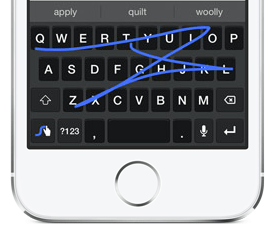
iOS 8 extensibility

Apple

At its heart, Extensibility will both remove friction and empower preference, letting users take their favorite app’s killer feature and use it from within another app.

It’s a giant step in the right direction for Apple, and it means that apps no longer will have compromise on polish in the name of being able to “do it all.” Instead, they’ll be able to focus on creating a unique experience that users will be able to take with them into other apps.

Extensibility will be available when iOS 8 launches as a free download this fall.


Corporate America Is Borrowing Like Crazy

In Business Insider’s latest Most Important Charts In The World feature, Gerard Minack of Minack Advisors alerted us to the following chart, which shows how much corporate debt has ballooned since the financial crisis.

“One ‘success’ of Fed Policy has been to encourage an increase in corporate leverage,” said Minack.

Minack Chart Q2

Business Insider

Minack cautions that in the next economic downturn, companies could find their debt burdens overwhelming, the way that households found themselves in trouble in 2007-08.Companies, however, have not slowed their pace of issuing debt, however, with investment-grade corporate bond issuance currently at $375.5 billion year-to-date, up 7% from a year ago.

This chart from Dealogic shows that companies are issuing debt at a torrid pace, more than offsetting the amount of debt coming due next year.

Dealogic bonds

Dealogic

Even without a recession or economic downturn, the bill on these debt loads is quickly coming due.

Dealogic notes that in 2015, $273.6 billion of investment-grade corporate bonds are due to mature, with 30% of this total due in the first quarter.

And the amount of debt coming due is only set to increase in 2016 and 2017, with $310.2 billion and $341 billion worth of debt set to mature in those years, respectively.

And this is the good stuff.

According to market commentary from Frost Investment Advisors, data from Dealogic shows that corporate bonds rated “junk” have totaled $210.8 billion year-to-date, the highest level for the first half of a year since 2000.

And in his latest weekly commentary, John Hussman of Hussman Funds cautioned on the quantity of this debt, writing that, “the major risk to economic stability is not that the stock market is overvalued, but that so much low-quality debt has been issued.”

Yesterday we highlighted, this chart from Dave Lutz at JonesTrading showing the recent divergence in the S&P 500 and high-yield bonds.

Most market headlines come from the stock market and economic data, but the bond market and the debt held by U.S. companies cannot be forgotten.

Bibliomotion Author Lauren Rothman to Appear on TLC’s ‘Sunday Brunch’

Bibliomotion’s Lauren Rothman, author of ‘Style Bible’, will share fashion insights on TLC’s new show ‘Sunday Brunch

Lauren Rothman "Styleauteur"
Styleauteur Lauren Rothman has her finger on the pulse of fashion.

Boston, MA (PRWEB) July 30, 2014

Bibliomotion author and style expert Lauren Rothman will appear on TLC’s new show called ‘Sunday Brunch’ for the next four Sundays from 1-2pm. On the show, hosted by TLC’s Ereka Vetrini, Rothman will share style tips and fashion insights.

Click here to watch a preview of the show.

Rothman is the author of Style Bible: What to Wear to Work (Bibliomotion, October 2013), in which she addresses the basics of fashion and executive presence by offering advice, anecdotes, and style alerts that help readers avoid major fashion faux pas at the office.

Rothman also regularly appears on Let’s Talk Live DC and is a frequent contributor to Fashion Whip, her political style column in The Huffington Post.

About Lauren Rothman:

Lauren A. Rothman, also known as “the Styleauteur,” is a fashion, style, and trend expert. Her wide-ranging experience includes working at Elle Magazine, MTV Networks Latin America, on Capitol Hill for former Congressman Peter Deutch, and as a wardrobe consultant for both Nordstrom and Saks Fifth Avenue. Her tips on wardrobe management have been featured in Glamour, Real Simple,People StyleWatch, and Washingtonian magazines, as well as in Politico, The Wall Street Journal, The Washington Post, The Huffington Post, The Financial Times, MSNBC, Niche Media, on NPR, and on XM/Sirius radio. She has discussed politics and style on Entertainment Tonight, The Insider, CNN, and in her in column – The Fashion Whip – on The Huffington Post. Rothman studied at the University of Salamanca in Spain and graduated from Colby College in Waterville, Maine with a major in English literature. Rothman lives with her husband, son, and pink toenail polished Dogue de Bordeaux in McLean, VA.

About Style Bible:

First impressions (and second ones!) count, whether you are an intern or a CEO. Lauren A. Rothman addresses an age-old dilemma: how to be appropriate and stylish in the workplace. Based on a decade of experience in the fashion industry, she addresses the basics of fashion and executive presence by offering advice, anecdotes, and style alerts that help readers avoid major fashion faux pas at the office. Style Bible: What to Wear to Work is the must-have resource for the modern professional, male or female, climbing the ladder of success. Lauren identifies the ultimate wardrobe essentials, and reveals shopping strategies and destinations for the everyday person. Style Bible, complete with helpful illustrations, is the go-to manual on how to dress for every professional occasion and a valuable resource for understanding dress codes by industry, city, and gender so that your visual cues will make a strong impact. Make a commitment to being better dressed at work with Style Bible.

About Bibliomotion:

Bibliomotion is a book publishing house designed for the new publishing landscape. While many publishers work to retrofit old processes for new realities, Bibliomotion was founded by book-industry veterans who believe the best approach is a fresh one – one that focuses on empowering authors and serving readers above all else. Moving away from the top-down model that has dominated the publishing process for years, we give each member of the team – including the author – a seat at the table from the very beginning and in doing so, work side-by-side to launch and sell the best content possible, making it available in a variety of forms.

ARGENTINA DEFAULTS

cristina fernandez de kirchner

REUTERS/Eduardo Munoz

Argentina has defaulted.Argentine Finance Minister Axel Kicillof delivered the news to the world from Argentina’s consulate in New York City on Wednesday.

Kicillof had just finished a meeting in which he and a delegation from The Republic failed to satisfy the demands of a group of hedge fund creditors negotiating over $1.3 billion worth of debt owed to them for over a decade.

“The Argentine Republic has filed for a stay [on payment] with Judge Griesa… The Judge decided that if the vulture funds said there could be a stay there would be a stay,” said Kicillof. “The vulture funds were not willing to grant the stay.”

Without the stay and without payment, Argentina is in default.

“Notwithstanding any claim to the contrary, Default is not a mere “technical” condition, but rather a real and painful event that will hurt real people: these include all ordinary Argentine citizens, the exchange bondholders (who will not receive their interest ) and the holdouts ( who will not receive payment of the judgments they obtained in Court),” said Daniel Pollack the Court’s appointed mediator.

Pollack also said he would continue to make himself available for more discussions.

In Argentina’s defense, Kicillof repeated the same argument that the administration has been making for months — that paying the “vultures” would be a violation of Argentine law. That’s because there is a clause in The Republic’s bond agreements called the RUFO — Rights Upon Future Offering — clause. It expires in 2015.

According to RUFO, if Argentina negotiates better terms with some bondholders, all bondholders have a claim on those terms. That would open the country to up to $15 billion worth of payments. Earlier this month, the Court didn’t buy that, and refused Argentina’s request for a stay on payment until negotiations could be worked out (ideally with a payment to NML due in 2015).

axel kicillof

Screenshot, TN

Argentine Economy Minister, Axel Kicillof

“This was a situation of extortion,” said Kicillof. “We will not just sign anything that could lead to more external debt for Argentina… We will avoid it with all of our weapons.”The “vulture funds” are investors known collectively as NML Capital and led by hedge fund billionaire Paul Singer. They would not take haircuts on debt dating back to Argentina’s last default in 2001 like over 90% of their fellow bond holders.

To Argentina that refusal made them vultures, and you don’t pay vultures. Instead you sue them all the way up to the Supreme Court and lose.

What’s off about all this is that the $15 billion from RUFO is chump change compared to what the country might have to pay if it goes into default. Default opens the country up to “acceleration clause” claims — in which bondholders sue for all their money at once, and immediately — worth $29 billion. That’s everything in Argentina’s Central Bank.

Earlier today, Argentine bankers put together a last ditch rescue package. They offered to put down $250 million as collateral — a show of good faith that the country was willing to pay (and avoid triggering RUFO) in 2015. Another option would have been for banks to buy NML’s debt, and then request a stay on payment themselves.

But for any of that to happen there would have had to be a stay on payment, and hedge funds would not allow that to happen.

Indeed, even before Kicillof said a word Standard & Poors cut the country’s rating to “selective default” — meaning Argentina chose to renege on some of its payments, but not all of them.

“We are… lowering our long-and short-term foreign currency sovereign credit ratings on Argentina to selective default (‘SD’) from ‘CCC-/C’,” said the agency’s release, “indicating that Argentina defaulted on some of its foreign currency obligations. At the same time, we are removing the ‘CCC-/C’ foreign currency ratings from CreditWatch, where they were placed with negative implications on July 1, 2014.”

In his address, Kicillof said that he would not be surprised if NML held sway over rating agencies, and would try to use its power to make things very uncomfortable Argentina.

But so be it. He said that the country would continue on doing what it’s been doing — trying to pay “exchange bondholders” (the 92% of bondholders who did restructure their debt) without paying the “vultures.”

That flies directly in the face of the Supreme Court, which upheld a lower Court’s ruling in favor of NML. New York Judge Thomas Griesa ruled that Argentina could not favor some bondholders over others according to a clause in Argentina’s called pari passu. In Latin, it means “equal step.”

When Argentina tried to pay exchange bondholders earlier this month, Griesa sent that money right back to The Republic. And there it sits in a Bank of New York Mellon custodial account.

“First we’re not going to sign any agreement that hurts Argentina’s future,” said Kicillof. “Second, we’re going to defend the 92% of bondholders that did restructure… In third place, we’re going to take every measure… we have to make sure this situation is not perpetuated. Argentina is ready to talk, to come to an agreement. Let’s come to a just, fair… ruling for 100% of our investors. But do not make us do anything illegal… Do not make us do anything unjust… Do not make us do anything that will make us put Argentina’s economy at risk…. We won’t allow it.”

The full statment from Pollack is below.

This morning and this afternoon, representatives of the Republic of Argentina, led by Minister of the Economy, Axel Kicillof, and representatives of its large bondholders held further face-to-face meetings in my office and in my presence.

Unfortunately, no agreement was reached and the Republic of Argentina will imminently be in Default. Today, July 30, was the last day of the grace period for the Republic of Argentina to pay many hundreds of millions of dollars of interest to its “exchange” bondholders, i.e. those who took bonds in 2005 and 2010 in exchange for the bonds they held following the Default of 2001.

In order to make that payment of interest, however, the Republic of Argentina was also required, simultaneously, to make a “ratable” payment to the bondholders who declined to accept the exchanges of 2005 and 2010, i.e. the “holdouts”. The Republic of Argentina did not meet those conditions and, as a result, will be in Default.

Notwithstanding any claim to the contrary, Default is not a mere “technical” condition, but rather a real and painful event that will hurt real people: these include all ordinary Argentine citizens, the exchange bondholders (who will not receive their interest ) and the holdouts ( who will not receive payment of the judgments they obtained in Court).

The full consequences of Default are not predictable, but they certainly are not positive. This case has been highly publicized and highly politicized for many weeks. What has been perfectly clear to me all along, however, in my capacity as the neutral Special Master, is that the laws of the United States must be obeyed by all parties. The courts of the United States (both the United States District Court and the United States Court of Appeals), after full briefings and hearings, ruled that the Republic of Argentina could not lawfully make the interest payments to the exchange bondholders unless it simultaneously made the payments due the holdouts.

I have worked relentlessly, over a five-week period, to bring the Republic of Argentina and its bondholders together in an agreement that would allow the June 30 interest payment of many hundreds of millions of dollars to be made, and to be made lawfully, thereby avoiding Default. It is not my role or intent to find fault with either side. I will continue to be available to the parties to aid them in reaching a resolution which they must reach in the interests of all concerned.

Default cannot be allowed to lapse into a permanent condition or the Republic of Argentina and the bondholders, both exchange and holdouts, will suffer increasingly grievous harm, and the ordinary Argentine citizen will be the real and ultimate victim.

3D View of Mt. Everest – put your sound on and when you arrive at the peak, move your mouse for a 360 degree view from the top of the World

http://everestavalanchetragedy.com/mt-everest-journey.html