Feeds:
Posts
Comments

Venture Capital, Chinese Neil Shen Tops The Midas List 2018

2017 was a contrasting year for venture capital.

On one hand, some detestable cases of sexual harrassments came to light and triggered an earthquake in the industry whose effects will resonate for years.

On the other hand, the industry continued to show strong growth. As an example, in the U.S., $84 billion were invested in 8,035 companies across 8,076 deals, the highest annual amount of capital deployed to the entrepreneurial ecosystem since the early 2000’s, according to the PitchBook-NVCA Venture Monitor.

But that’s just an example. The Midas List 2018, presented by Forbes in partnership with TrueBridge Capital Partners, shows that China is rising and represents an increasing slice of the global venture capital industry.
#1 Neil Shen, Founding Managing Partner, Sequoia Capital China, marks the first time a Chinese national has reached the top of the list. In addition, sixteen members of the list are either Chinese nationals or based in the country. Shen reached the top position after Ppdai Group went public in November 2017.
#2 is Bill Gurley, General Partner of Benchmark, which sold about $900m of its Uber stock.
#3 is Jim Goetz, Partner, Sequoia Capital, who topped the list for four consecutive years.

Considering other aspects, the list is still dominated by men with only nine women present. They are Mary Meeker (#6), Rebecca Lynn (#31), Ann Miura-Ko (#55), Beth Seidenberg (#62), Jenny Lee (#74), Kirsten Green (#77), Theresia Gouw (#89), and new comers Sonali De Rycker (#95) and Aileen Lee (#97).

Have a look at the entire list below.

    1. Neil Shen – Founding Managing Partner, Sequoia Capital China
    2. Bill Gurley – General Partner, Benchmark
    3. Jim Goetz – Partner, Sequoia Capital
    4. Carl Gordon – General Partner, OrbiMed
    5. Robert Nelsen – Cofounder and Managing Director, ARCH Venture Partners
    6. Mary Meeker – General Partner, Kleiner Perkins Caufield &Byers
    7. Peter Fenton – General Partner, Benchmark
    8. J.P. Gan – Managing Partner, Qiming Venture Partners
    9. Douglas Leone – Partner, Sequoia Capital
    10. Brian Singerman – Partner, Founders
    11. Eric Paley – Partner, Founder Collective
    12. Mike Maples, Jr. – Co-Founding Partner, Floodgate
    13. Kui Zhou – Partner, Sequoia Capital China
    14. Roelof Botha – Partner, Sequoia Capital
    15. Byron Deeter – Partner, Bessemer Venture Partners
    16. Scott Sandell – Managing General Partner, New Enterprise Associates
    17. Rob Hayes – Partner, First Round Capital
    18. Dennis Phelps – General Partner, IVP
    19. Josh Kopelman – General Partner, First Round Capital
    20. Hans Tung – Managing Partner, GGV Capital
    21. Neeraj Agrawal – General Partner, Battery Ventures
    22. Joe Lonsdale – Founding Partner, 8VC
    23. Xiaojun Li – Partner, IDG Capital
    24. Xiao Ping Xu – Managing Partner, ZhenFund
    25. Jeff Jordan – General Partner, Andreessen Horowitz
    26. Tony Florence – General Partner, New Enterprise Associates
    27. Steve Anderson – Founder and Partner, Baseline Ventures
    28. Bryan Roberts – Partner, Venrock
    29. John Doerr – General Partner, Kleiner Perkins Caufield & Byers
    30. Sameer Gandhi – Partner, Accel
    31. Rebecca Lynn – Cofounder and General Partner, Canvas Ventures
    32. Alfred Lin – Partner, Sequoia Capital
    33. Anton Levy – Managing Director, General Atlantic
    34. Scott Shleifer – Partner, Tiger Global Management
    35. Vinod Khosla – Partner, Khosla Ventures
    36. Deven Parekh – Managing Director, Insight Venture Partners
    37. Shailendra Singh – Managing Director, Sequoia Capital India
    38. Marc Andreessen – Cofounder and Partner, Andreessen Horowitz
    39. Jeremy Liew – Managing Director, Lightspeed Venture Partners
    40. Mitch Lasky – General Partner, Benchmark
    41. Jeremy Levine – Partner, Bessemer Venture Partners
    42. Allen Zhu – Managing Director, GSR Ventures
    43. Lee Fixel – Partner, Tiger Global Management
    44. Jim Tananbaum – CEO and Managing Director, Foresite Capital
    45. Ryan Sweeney – Partner, Accel
    46. Ravi Mhatre – Partner, Lightspeed Venture Partners
    47. Hemant Taneja – Managing Director, General Catalyst
    48. Jonathan Silverstein – General Partner, OrbiMed
    49. David Cowan – Partner, Bessemer Venture Partners
    50. Matt Cohler – General Partner, Benchmark
    51. Andrew Braccia – Accel
    52. Yuri Milner – Partner, Digital Sky Technologies
    53. Aydin Senkut – Founder & Managing Director, Felicis Ventures
    54. Jeff Horing – Cofounder and Managing Director, Insight Venture Partners
    55. Ann Miura-Ko – Partner, Floodgate
    56. Gaurav Garg – Founding Partner, Wing Venture Capital
    57. Jim Breyer – Founder, CEO, Breyer Capital
    58. David Weiden – General Partner, Khosla Ventures
    59. James Mi – Founding Partner, Lightspeed China Partners
    60. Frank Rotman – Founding Partner, QED Investors
    61. Erhai Liu – Founder of Joy Capital
    62. Beth Seidenberg – General Partner, Kleiner Perkins Caufield & Byers
    63. Fred Wilson – General Partner, Union Square Ventures
    64. Hurst Lin – Cofounder and General Partner, DCM Ventures
    65. Jeff Lieberman – Managing Director, Insight Venture Partners
    66. Klaus Hommels – Founder, Lakestar
    67. Peter Thiel – Partner, Founders Fund
    68. Ben Horowitz – Cofounder and Partner, Andreessen Horowitz
    69. Joel Cutler – Cofounder and Managing Director, General Catalyst
    70. Bryan Schreier – Partner, Sequoia Capital
    71. Todd Chaffee – General Partner, IVP
    72. Kevin Comolli – Partner, Accel
    73. Yi Cao – Managing Partner, Source Code Capital
    74. Jenny Lee – Managing Partner, GGV Capital
    75. Michael Eisenberg – Partner, Aleph
    76. David Yuan – Partner, Redpoint Ventures
    77. Kirsten Green – Founder, Forerunner Ventures
    78. Quan Zhou – Partner, IDG Capital
    79. Roger Ehrenberg – Managing Partner, IA Ventures
    80. Navin Chaddha – Managing Director, Mayfield Fund
    81. Ron Conway – Founder, SV Angel
    82. Peter Levine – General Partner, Andreessen Horowitz
    83. Neil Rimer – Partner, Index Ventures
    84. David Chao – Cofounder and General Partner, DCM Ventures
    85. Randy Glein – Partner, DFJ Growth
    86. Ted Schlein – General Partner, Kleiner Perkins Caufield & Byers
    87. Jules Maltz – General Partner, Institutional Venture Partners
    88. Mamoon Hamid – General Partner, Kleiner Perkins Caufield & Byers
    89. Theresia Gouw – Founding Partner, Aspect Ventures
    90. Steven Ji – Partner, Sequoia Capital China
    91. Rich Wong – Partner, Accel
    92. Asheem Chandna – Partner, Greylock Partners
    93. Jeff Crowe – Managing Partner, Norwest Venture Partners
    94. Salil Deshpande – Managing Director, Bain Capital Ventures
    95. Sonali De Rycker – Partner, Accel
    96. Young Guo – Partner, IDG Capital
    97. Aileen Lee – Founder and Partner, Cowboy Ventures
    98. Ping Li – Partner, Accel
    99. John Vrionis – Partner, Unusual Ventures
    100. Jan Hammer – Partner, Index Ventures
Netflix eyeing billboard company for $300 million

By  – Staff Writer, L.A. Biz

Netflix Inc.’s marketing strategy for its digital programming includes one of the industry’s most traditional media: billboards.

Now the streaming giant is considering cutting out the middleman and buying the outdoor marketing platform for itself.

Los Gatos-based Netflix (NASDAQ: NFLX) has offered more than $300 million for Regency Outdoor Advertising, Reuters reports.

The move would mark Netflix’s second — and likely largest — acquisition in its history. The company’s only other purchase was of Mark Millar’s comic-book publisher Millarworld for an undisclosed amount.

Netflix is just one of the bidders for the West Hollywood firm, owned by Drake and Brian Kennedy, sources told Reuters, and the brothers could accept another offer.

Regency’s billboards fill Southern California, with locations at LAX, on the area’s major freeways, along the Sunset Strip, in Westwood Village near UCLA and “in sight of” Edison Field in Orange County, where the Anaheim Angels play, according to the company’s website.

The report on its possible acquisition falls in line with Netflix’s plan to increase spending on marketing this year. In a letter to shareholders in January, the company said it would boost its marketing budget by more than half from $1.3 billion to $2 billion.

“Big hits like ‘13 Reasons Why’ and ‘Stranger Things’ result from a combination of great content and great marketing,” the note said. “We’re taking marketing spend up a little faster than revenue for this year … because our testing results indicate this is wise.”

A ‘Star Trek’ writer made a 1999 prediction that absolutely nailed what technology is like today

star trek screenshot/”Star Trek” (2009)
  • A column from 1999 went viral because its predictions are dead-on.
  • You have to read it to believe it.

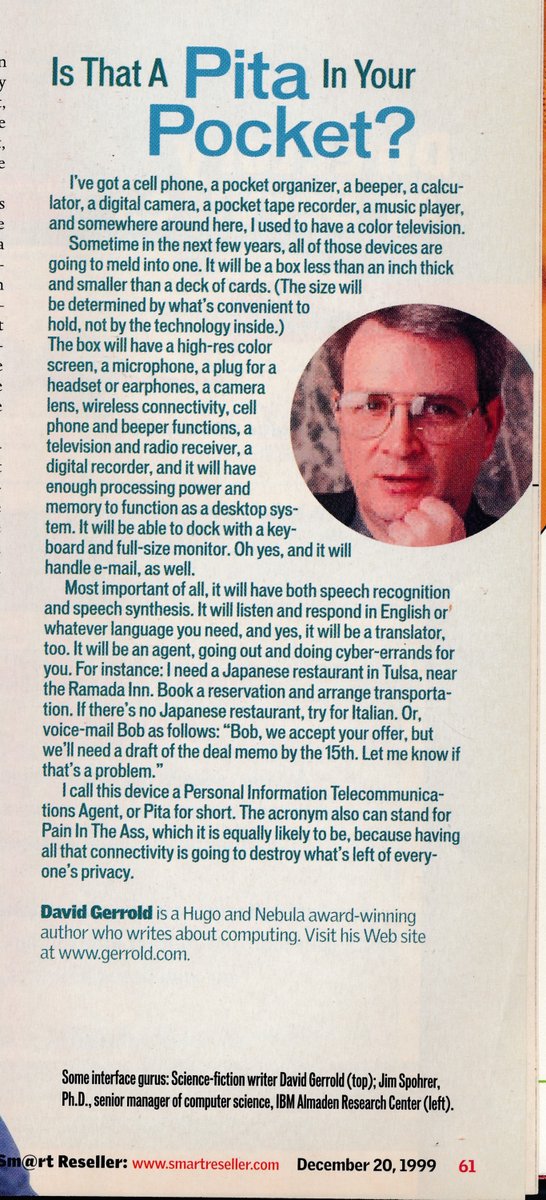
An 18-year-old magazine column went viral over the past week because it’s just so good. The column effectively predicts the iPhone, Siri, and even Facebook’s privacy scandals — all the way back in 1999.

The prediction was made by science fiction author David Gerrold, who writes novels and used to write for “Star Trek.” It was shared this week by technology writer Esther Schindler. It was published in a now-defunct magazine called Smart Reseller, according to Fast Company.

Check it out:

—Esther Schindler (@estherschindler) March 28, 2018//platform.twitter.com/widgets.js ” data-e2e-name=”embed-container” data-media-container=”embed”>

What makes this so special is that not only did Gerrold foresee smartphones, but he also clearly saw the privacy issues that have come with them.

If there’s one quibble with the prescient column, it’s that voice assistants — whether Apple’s Siri, Google’s Assistant, or Amazon’s Alexa — can’t really do complicated queries the way Gerrold predicted. But maybe the prediction is still ahead of its time.

San Francisco is so expensive that more people are leaving than moving in — and it could mean disaster for the nation’s tech capital

San Francisco
San Francisco is so expensive that more people are leaving the city than moving into it.
heyengel/Shutterstock
  • San Francisco’s metropolitan area lost more residents than it attracted between 2016 and 2017, according to US census data.
  • People are leaving San Francisco because of the out-of-control housing prices. The city’s median-priced home now costs $1.5 million.
  • The nation’s tech capital risks losing talent if they can’t afford to live there.

People are leaving San Francisco because, as they say, the rent is too damn high.

US census data shows the region that includes San Francisco, Oakland, and Hayward — a city in the East Bay that offers a quicker commute to Silicon Valley — lost more residents than it attracted between 2016 and 2017. And the migration is worsening in the Bay Area’s urban core.

The Wall Street Journal reported that in the year ending July 1, census data shows the area had a net loss of almost 24,000 residents who moved into other parts of California or the US.

The San Francisco-Oakland-Hayward metropolitan area lost only half that many residents the year prior. As recently as 2013 – 2014, the region saw net annual gains of about 15,000 people.

A critical lack of affordable housing and sky-high rent prices have made the San Francisco Bay Area unlivable for many artists, artisans, longtime residents, and even tech entrepreneurs.

The median-priced home in San Francisco sells for $1.5 million, according to Paragon Real Estate Group. It’s not uncommon for buyers to bid hundreds of thousands above asking and pay in all cash.

The situation has forced many to rent longer than they would like. In March, San Francisco’s median two-bedroom rent of $3,040 was about two and a half times as high as the national average. Still, people are finding ways to make it work. They cram into communal housing, or “co-living” units, that offer perks like maid service and free internet in lieu of space. Some give up their internet, cable, and cars, while others take home wherever they go by living in vans.

The housing crisis could put Silicon Valley at risk

The San Francisco Bay Area, recognized as a global hub of tech finance and innovation, may be at risk of losing top tech workers if they can’t afford to live there, even on six-figure salaries.

A recent report from Paragon Real Estate Group showed that the household income required to buy a median-priced home in San Francisco reached an all-time high of $303,000 in December.

Katherine Maher, executive director of the Wikimedia Foundation, which is based in San Francisco, responded to the report on Twitter, saying: “As a non-profit employer, I cannot see how we reconcile this with a future for our organization in San Francisco.”

She added: “Our local employees, particularly the younger ones, struggle to make ends meet. They leave when they start families. How can we be an equitable employer when only those who can afford to work for us, do?”

Brian Brennan, senior vice president at the Silicon Valley Leadership Group, told the Wall Street Journal that while the area’s high-paying jobs and lifestyle still bring tech workers to the Bay Area, “it is hard to get the best talent outside of this region to come here and stay here.”