Feeds:
Posts
Comments

Archive for August, 2014


Wildly Popular Messaging Apps Are Becoming Immersive Mobile Platforms In Their Own Right

Messaging_MAUs

BII

Messaging apps like WhatsApp and WeChat are huge and getting bigger.BI Intelligence‘s data shows that WeChat, LINE, WhatsApp, and Snapchat are all growing their user numbers in 2014 at a quarterly rate of 15% or higher.

Like social networks before them, these apps are becoming the hubs for everything global smartphone audiences do on mobile. Messaging apps help people connect with one another, share photos, video chat, and increasingly engage in activities that earn significant revenue for the apps, including playing games, buying digital goods, and even shopping offline.

User sessions for messaging and social apps increased 203% in 2013, according to Flurry. That’s about twice as fast as the increase in sessions for all types of apps, which was 115% for the year.

A recent report from BI Intelligence takes a deep dive into the messaging wars. The report contains our exclusive estimates for monthly active users for all the top global messaging platforms — including some like Snapchat and LINE, which do not release MAU numbers. In the report, we describe the similarities and differences between 15 messaging apps and include a case study of Japan-based LINE as an example of how this category can monetize and drive hundreds of millions of dollars in revenue.

Access The Full Report And Data By Signing Up For A Free Trial Today>>

Here are some of the top insights on the mobile messaging wars:

The report is full of charts and data that can be easily downloaded and put to use.

In full, the report:

For full access to all BI Intelligence’s charts, analysis, and daily briefings on the digital media industry, get started with a free trial.

Read Full Post »

An Upcoming iPhone Feature From Apple Will Completely Transform How You Use Apps

Apple’s new operating system for mobile phones and tablets, iOS 8, is slated to release in the fall, and one of its features will transform how you use your apps.Apple calls it Extensibility, and it basically allows your apps to share both information and functionality with each other, which means less time spent switching between apps.

Let’s say you have a favorite app for editing your photos, such as Adobe Photoshop Express.

Before Extensibility, you would need to be inside Photoshop Express in order to use its editing tools. But with Extensibility, you’ll be able to access those same editing tools right from within Apple’s native Photos app. The editing tools from Photoshop Express would act as the “extension” in this case, and the Photos app would then have access to that extension, allowing you to take advantage of Photoshop Express’ unique features and functionality even from within outside apps.

Popular password management app 1Password has already demonstrated how it will use Extensibility to let users easily fill in password info from within any app. Before, you had to boot up 1Password, copy the password for a site or app, and then open the site or app and paste it in. But Extensibility eliminates those extra steps. Other apps can plug into 1Password and let you use it without opening a separate app.So how does it work?

There are different types of extensions depending on how and where they will share information with other apps. Apple wants to prevent apps from simply having full access to all of the information in your other apps, so extensions are focused on particular functions and tasks, such as Share, Action, and Photo Editing.

It’s important to note that an app won’t be able to randomly request important info from another app without your consent. You have complete control over when an app makes a request to use an extension, meaning an app can’t request your PayPal password from 1Password unless you ask it to.

Sports Center widget iOS 8 extension

Apple

Besides being secure, Extensibility means more information at your fingertips, and faster.Apple, for example, is allowing extensions to plug directly into your iPhone’s Notification Center, where it will act as a widget. If you want to stay up to date on the latest scores, you could enable ESPN’s Sports Center app to see its extension in Notification Center, allowing you to quickly check out what’s going on without opening the Sports Center app.

You won’t only be able to glimpse information from within Notification Center, extensions will also let you take action.Say you were using the Philips Hue app to control your smart light bulbs. Right now, that’s all done within the app, making it a tad inefficient. But Philips has shown off an iOS 8 concept for an extension that would let you turn on and off your smart lighting, even select some pre-set mood lighting, all from a simple swipe up of the Notification Center.

At its WWDC conference in June, Apple highlighted how an eBay extension would allow you to keep track of auctions from within Notification Center. And since extensions can also include actions, you’re even able to place a bid without opening the app.

Extensions can also be used to share things to your favorite social media site. Apple has limited sharing features integrated into iOS 7, but iOS 8 will usher in the ability for any social media app to design its own extension.

Say you’re browsing the internet using Safari. With Extensibility, you’ll be able to tap the image, select which social media website or app you’d like to share the picture with, and you’re done.

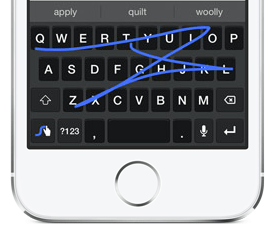
Extensibility even extends to core Apple software, such as its keyboard. If another app has a keyboard that you like better than Apple’s, they simply have to enable a keyboard extension to give users the ability to replace Apple’s keyboard with their own.

iOS 8 extensibility

Apple

At its heart, Extensibility will both remove friction and empower preference, letting users take their favorite app’s killer feature and use it from within another app.

It’s a giant step in the right direction for Apple, and it means that apps no longer will have compromise on polish in the name of being able to “do it all.” Instead, they’ll be able to focus on creating a unique experience that users will be able to take with them into other apps.

Extensibility will be available when iOS 8 launches as a free download this fall.

Read Full Post »


Corporate America Is Borrowing Like Crazy

In Business Insider’s latest Most Important Charts In The World feature, Gerard Minack of Minack Advisors alerted us to the following chart, which shows how much corporate debt has ballooned since the financial crisis.

“One ‘success’ of Fed Policy has been to encourage an increase in corporate leverage,” said Minack.

Minack Chart Q2

Business Insider

Minack cautions that in the next economic downturn, companies could find their debt burdens overwhelming, the way that households found themselves in trouble in 2007-08.Companies, however, have not slowed their pace of issuing debt, however, with investment-grade corporate bond issuance currently at $375.5 billion year-to-date, up 7% from a year ago.

This chart from Dealogic shows that companies are issuing debt at a torrid pace, more than offsetting the amount of debt coming due next year.

Dealogic bonds

Dealogic

Even without a recession or economic downturn, the bill on these debt loads is quickly coming due.

Dealogic notes that in 2015, $273.6 billion of investment-grade corporate bonds are due to mature, with 30% of this total due in the first quarter.

And the amount of debt coming due is only set to increase in 2016 and 2017, with $310.2 billion and $341 billion worth of debt set to mature in those years, respectively.

And this is the good stuff.

According to market commentary from Frost Investment Advisors, data from Dealogic shows that corporate bonds rated “junk” have totaled $210.8 billion year-to-date, the highest level for the first half of a year since 2000.

And in his latest weekly commentary, John Hussman of Hussman Funds cautioned on the quantity of this debt, writing that, “the major risk to economic stability is not that the stock market is overvalued, but that so much low-quality debt has been issued.”

Yesterday we highlighted, this chart from Dave Lutz at JonesTrading showing the recent divergence in the S&P 500 and high-yield bonds.

Most market headlines come from the stock market and economic data, but the bond market and the debt held by U.S. companies cannot be forgotten.

Read Full Post »

« Newer Posts