
Feeds:
Posts
Comments

Posts Tagged ‘Amazon’

Unknown

Dear Friends, – by Brad Powers, Founder & CEO

April has been a tremendous month for Cupcake Digital Inc. and I’m extremely excited to share our exciting progress you.

App News:

April has not only been our strongest month for App production, but we continue to achieve top ranking positions for our releases on major distribution platforms.

In fact, yesterday Wubbzy’s Dance Party, an App released only this past Tuesday (4/23), achieved the “#1 Paid App” ranking for iPad in Apple iTunes books in just three days.

jpeg

Other April Releases Include:

pngApril 4: Wubbzy’s Magic School

In this feature-rich, deluxe storybook app, Wubbzy’s Magic School! After a day at Moo Moo the Magician’s Castle, the friends learn that magic really does happen when you believe in yourself and try your hardest.

png-1

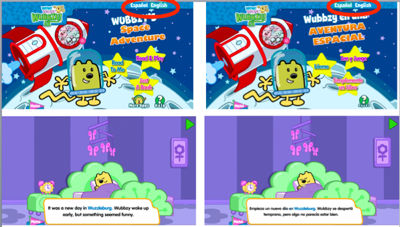
April 11: Wubbzy’s Space Adventure / Wubbzy en una Aventura Espacial

This is a very special release since it is our offering to include both an English and Spanish version within the same App.  Kids, parents, and caregivers now have the choice of language with which to listen to the narration or read the story themselves.

This initiative not only increases the addressable market for our Apps, but also expands our marketing capabilities.

We are currently working on adding a Spanish version to a series of English-only Apps in our existing library across all distribution channels.
jpeg
April 16: Animal Planet’s Hide and Seek Pets

Wubbzy’s Dance Party, an App released only this past Tuesday (4/23), achieved the “#1 Paid App” ranking for iPad in Apple iTunes books in just three days.

jpeg-1

This is our first App for Animal Planet marking the first property expansion for our library beyond Wow, Wow, Wubbzy.

We are extremely excited about both the sales generated and the reviews we have been getting.  Premium priced at $3.99, this App has already already reached the “#3 position” within HOT New Education Section on Amazon.

jpeg

Apr 25: Wubbzy’s Animal Coloring Book

png

This marks the debut of our new coloring engine.  It will not only allow us to create “stand alone” coloring and activity books for all our properties, but it will also be integrated into all of our new Apps.
Looking Ahead:

Early May: Fraggle Rock “Fraggle Friends Forever”

This release will expand our App library to three active licensed properties.

As part of the preparations for its release, I have just returned from the 30th Anniversary Celebration for Jim Henson’s Fraggle Rock in Los Angeles.  We have provided sneak peeks to several national media outlets. The feedback has been fantastic.

The App launch in early May will be supported by a significant media campaign in collaboration with the Henson organization.

In June: Strawberry Shortcake

We look forward to our first App release for American Greeting’s Strawberry Shortcake in June with great anticipation.

Strawberry Shortcake is an iconic children’s property and we are proud to be their licensed partner. This will be the fourth active licensed property in our growing App library.

Like all our properties, the launch of the Strawberry Shortcake App will be supported by a robust marketing campaign to increase sales rapidly.

Properties & Licensing Pipeline

We continue to make great progress in our property acquisition initiatives.  We are currently in the final stages of negotiation with several “A+” properties and will be making announcements about them shortly.

Continued Accolades for Cupcake Digital Apps

In addition to increased sales, the positive accolades for our Apps continue to keep pouring in.

We have received a tremendous amount of press with the release of our first dual language App, Wubbzy’s Space Adventure/ Wubbzy en una Aventura Espacial, both in online and traditional press.

We also continue to win awards from Famigo (a site that provides recommendations for kid-safe apps and content) and Appysmarts (a resource that helps parents choose the best apps for their kids).

For a full list of our reviews and awards please visit: http://www.cupcakedigital.com/testimonials/

Distribution Partnerships

One of the key stones of our marketing strategy is building strong relationships with our distribution partners.

Recent results of those relationships include:

1.  iTunes featuring Animal Planet Hide and Seek Pets and Wubbzy’s Dance Party in their New and Noteworthy section.

2.  iTunes also selected Wubbzy’s Pirate Treasure as a feature in a special “Apps for Preschool & Kindergarten” selection.

3.  Amazon also continue to feature Cupcake Digital Inc. Apps throughout their App store. Barnes & Noble is currently planning several “curated” mailings and site positions especially for us.

4.  New Position Paper Regarding Parental Guidelines for Children’s Apps

We are delighted to have recently published a new white paper based on an interview with Dr. Natascha Crandall, PH.D.  Dr. Crandall is a psychologist and educator with a special interest in enhancing children’s growth and development through the power of media. This paper explores Dr. Crandall’s findings on App use by children while also establishing a framework for the continuous improvement of our own Apps.

As part of the white paper we also included parent and caregiver guidelines for using Apps as a supplement to children’s learning.

To read the complete position paper, please visit:

http://www.cupcakedigital.com/blog/new-white-paper-features-dr-natachsa-crandall-on-apps-for-children/

Make Your Opinion Count: Download & Review a Cupcake App Today!

As always, if you have not already done so, please visit http://www.cupcakedigital.com/apps/ and click on the store icon of your choice (iTunes, Amazon, Google Play or Nook) to download our Apps on any mobile phone or tablet device.

Give it a test drive and make sure to write a review!

Encourage your friends, family and loved ones to do the same. Help us create a bigger viral buzz about the quality of our products.

Thank you for your on-going support! I will continue to update you on a regular basis.

In the meantime, please feel free to contact me anytime with questions or comments.

Sincerely,

Brad Powers

Chairman

Read Full Post »

Article from NYTimes.

Facebook shares will be tempting to buy when they start trading on Friday. The company has hefty profit margins, a household name and a shot at becoming the primary gateway to the Internet for much of the planet.

But if history offers any lesson, average investors face steep odds if they hope to make big money in a much-hyped stock like Facebook.

Sure, Facebook could be the next Google, whose shares now trade at more than six times their offering price. But it could also suffer the fate of Zynga, Groupon, Pandora and a host of other start-ups that came out of the gate strong, then quickly fell back.

Even after Facebook supersized its offering with plans to dole out more shares to the public, most retail investors will have a hard time getting shares in the social networking company at a reasonable price in its first days of trading.

Facebook’s I.P.O. values the company at more than $104 billion. And the mania surrounding the offering means Facebook shares will almost certainly rise on the first day of trading on Friday, the so-called one-day pop that is common for Internet offerings. At either level, Facebook’s price is likely to assume a growth rate that few companies have managed to sustain.

New investors, in part, are buying their shares from current owners who are taking some of their money off the table, a sign that the easy profits may have been made. Goldman Sachs, the PayPal co-founder Peter Thiel, and the venture capital firms DST Global and Accel Partners are all selling shares in the offering.

“It is a popular company, but it is still a highly speculative stock,” said Paul Brigandi, a senior vice president with the fund manager Direxion. “Outside investors should be cautious. It doesn’t fit into everyone’s risk profile.”

For the farsighted and deep-pocketed investors who got in early, Facebook is turning out to be a blockbuster. But by the time the first shares are publicly traded, new investors will be starting at a significant disadvantage.

Following the traditional Wall Street model, Facebook shares were parceled out to a select group of investors at an offering run by the company’s bankers on Thursday evening, priced at $38 a share. But public trading will begin with an auction on the Nasdaq exchange on Friday morning that is likely to push the stock far above beyond the initial offering price.

That is what happened to Groupon last fall. Shares of the daily deals site started trading at $28, above its offering price of $20. It eventually closed the day at $26.11.

The one-day pop is common phenomenon. Over the last year, newly public technology stocks, on average, have jumped 26 percent in their first day of trading, according to data collected by Jay R. Ritter, a professor of finance and an I.P.O. expert at the University of Florida.

In many of the hottest technology stocks, the rise has been more dramatic. LinkedIn, another social networking site, surged 109 percent on its first day in May 2011, and analysts say it is not hard to imagine a similar outcome with Facebook, given the enormous interest.

Unfortunately for investors, the first-day frenzy is not often sustained. In the technology bubble of the late 1990s, dozens of companies, Pets.com and Webvan among them, soared before crashing down.

At the height of the bubble in 2000, the average technology stock rose 87 percent on its first day. Three years later, those stocks were down 59 percent from their first-day closing prices and 38 percent from their offering prices, according to Professor Ritter’s data.

The more recent crop of technology start-ups has not been much more successful in maintaining the early excitement. A Morningstar analysis of the seven most prominent technology I.P.O.’s of the last year showed that after their stock prices jumped an average of 47 percent on the first day of trading, they were down 11 percent from their offering prices a month later. Groupon is now down about 40 percent from its I.P.O. price.

“It’s usually best to wait a few weeks to let the excitement wear off,” said James Krapfel, an I.P.O. analyst at Morningstar who conducted the analysis. “Buying in the first day is not generally a good strategy for making money.”

There are, of course, a number of major exceptions to this larger trend that would seem to provide hope for Facebook. Google, for instance, started rising on its first day and almost never looked back.

Even among the success stories, though, investors often have had to go through roller coaster rides on their way up. Amazon, for instance, surged when it went public in 1997 at $18 a share. But the stock soon sputtered, and it did not reach its early highs again until over a decade later. The shares now trade near $225.

More recently, LinkedIn has been trading about 140 percent above its offering price of $45, enough to provide positive returns even for investors who bought in the initial euphoria. But those investors had to sweat out months when LinkedIn stock was significantly down.

Apple is perhaps the clearest example of the patience that can be required to cash in on technology stocks. Nearly two decades after its I.P.O. in 1980, it was still occasionally trading below its first-day closing price, and it was only in the middle of the last decade — when the company began revolutionizing the music business — that it began its swift climb toward $600.

Facebook’s prospects will ultimately depend on the company’s ability to fulfill its early promise. It has a leg up on the start-ups of the late 1990s, which had no profits and dubious business models. Last year, in the seventh year since its founding, Facebook posted $3.7 billion in revenue and $1 billion in profit.

But investors buying the stock even at the offering price are assuming enormous future growth. While stock investors are generally willing to pay about $14 for every dollar of profit from the average company in the Standard & Poor’s 500 index, people buying Facebook at the estimate I.P.O. price are paying about $100 for each dollar of profit it made in the past year.

When Google went public in 2004, investors paid a bigger premium, about $120 for each dollar of earnings. But the search company at the time was growing both its sales and profits at a faster pace than Facebook is currently.

Facebook may be able to justify those valuations if it can keep expanding its profit at the pace it did last year, a feat some analysts have said is possible. But especially after the company recently revealed that its growth rate had slowed significantly in the first quarter, the number of doubters is growing.

“Facebook, by just about any measure, is a great company,” Professor Ritter said. “That doesn’t mean that Facebook will be a great investment.”

Read more here.

Read Full Post »

Article from AboveTheCrowd.com  by Bill Gurly

A few relevant scenes from the recent blockbuster Moneyball:

Peter Brand: Billy, Pena is an All Star. Okay? And if you dump him and this Hatteberg thing doesn’t work out the way that we want it to, you know, this is…this is the kind of decision that gets you fired. It is!
Billy Beane: Yes, you’re right. I may lose my job, in which case I’m a forty four year old guy with a high school diploma and a daughter I’d like to be able to send to college. You’re twenty five years old with a degree from Yale and a pretty impressive apprenticeship. I don’t think we’re asking the right question. I think the question we should be asking is, do you believe in this thing or not?
Peter Brand: I do.
Billy Beane: It’s a problem you think we need to explain ourselves. Don’t. To anyone.
Peter Brand: Okay.

———————————

Grady Fuson: No. Baseball isn’t just numbers, it’s not science. If it was then anybody could do what we’re doing, but they can’t because they don’t know what we know. They don’t have our experience and they don’t have our intuition.
Billy Beane: Okay.
Grady Fuson: Billy, you got a kid in there that’s got a degree in Economics from Yale. You got a scout here with twenty nine years of baseball experience. You’re listening to the wrong one. Now there are intangibles that only baseball people understand. You’re discounting what scouts have done for a hundred and fifty years, even yourself!

These two scenes from Moneyball illustrate something that may be essential to modern business: the incredible value of youth and innovative thinking relative to traditional experience. It turns out that the Moneyball character Peter Brand’s real name is not Peter Brand (played by Jonah Hill), but rather Paul DePodesta. And he didn’t go to Yale, but instead Harvard. He was indeed young – twenty-seven when he went to work for Billy Beane – and he did have an actual degree in Economics. What’s more, as you can see in the interaction above, Billy valued Paul’s (Peter Brand’s) opinions and decisions – despite the fact that he was a complete novice with respect to baseball operations.

A month or two ago, I had the unique opportunity to share the stage with Billy Beane at a management offsite for one of the leading companies in the Fortune 500. We were both fielding questions about innovation, and what one can do to keep their organization innovative. I talked about how many of the partners that have joined Benchmark Capital have been extremely young when they joined, including our most recent partner Matt Cohler who joined us at the age of 31. At Benchmark, we believe that young partners have many compelling differentiators. First, they will ideally have strong connections and compatibility with young entrepreneurs, who are frequently the founders of the largest breakout companies. They are also likely to be frequent users of the latest and greatest technologies (all the more important with today’s consumer Internet market). Like the “Moneyball” situation described herein, young VCs are open to new ways of doing things. This form of “rule-breaking,” or intentionally ignoring yesterday’s doctrine, may in fact be a requirement for successful venture capital investing.

When I mentioned this intentional bias towards youth, Billy Beane abruptly concurred. He noted that injecting youth into the A’s organization is also a key philosophy of his. Paul DePodesta may have been the first young gun that Billy hired, but he was far from the last. Billy continues to recruit young, bright, talented people right out of college to help shake up the closed-minded thinking that can develop with an “experience only” staff. Also noted was the fact that if a certain “experience” is shared by all teams in the league, then it is no longer a strategic weapon. You can only win with a unique advantage.

The impact of youth on the technology scene is undeniable. The included table lists the founding age of some of the most prominent founders of our time. The facts are humbling and intimidating, especially for someone who is no longer in their twenties or early thirties. Can someone in their forties be innovative? Or, do the same things that produce “experience” constrain you from the creativity and perspective needed to innovate?

Lets look at some of the specific advantages of youth. First, as mentioned before, without the blinders of past experience, you don’t know what not to try, and therefore, you are willing to attempt things that experienced executives will not consider. Second, you are quick to leverage new technologies and tools way before the incumbent will see an opportunity or a need to pay attention. For me this may be the bigger issue. The rate of change on the Internet is extremely high. If the weapon du jour is constantly changing, being nimble and open-minded far outweighs being experienced. Blink and you are behind. Youth is a competitive weapon.

The point Billy raised regarding the fleeting value of experience is also important to consider. As the world becomes more and more aware of a trick or a skill, the value of that experience begins to decay. If word travels fast, the value of the skill diminishes quickly. Best practice becomes table stakes to stay-afloat, but not to get ahead. We see examples of this every day with Facebook application user acquisition techniques. Companies find a seam or arbitrage that creates a small window of opportunity in the market, but quickly others mimic the same technique and the advantage proves fleeting.

Back before the Yahoo BOD hired Carol Bartz, there was much speculation about the important traits for Yahoo’s next CEO. Most of the analysis honed in on two key traits for the company’s next leader – the ability to lead and the ability to innovate. I remember trying to think about leaders that I thought would have a chance at having a measurable impact. On one hand, you could put a very young innovative executive into the role, but it is hard to imagine handing a $15B public company over to someone remarkably inexperienced. The other side of the coin is equally difficult – thinking of a seasoned executive who has the ability to dramatically innovate Yahoo’s products and business model.

There were only a handful of people (as few as three) that I could think of at the time that fit this second profile. Thinking back now, they all shared the following characteristic: despite being experienced CEOs, these individuals all “thought young” i.e. they were open-minded and curious. And they did not believe that experience gave them all the answers. These type of executives love diving head-first into the latest and greatest technologies as soon as they become available.

If you want to stay “young” and innovative, you have no choice but to immerse yourself in the emerging tools of the current and next generation. You MUST stay current, as it is illusionary to imagine being innovative without being current. Also realize that the generational shifts are much shorter than they were in the past. If you were an innovative Internet company five short years ago, you might have learned about SEM and SEO. Most of the newly disruptive companies are no longer using these tools as paths to success – they have moved on to social/viral techniques. The game keeps changing, and if you are not “all-in” in terms of learning what’s new, than you may be falling rapidly behind.

Consider these questions:

  1. When a new device or operating system comes out do you rush out to get it as soon as possible – just because you want to play with the new features? Or do you wait for the dust to settle so that you don’t make a mistaken purchase. Or because you don’t want to waste your time.
  2. Do you use LinkedIn for all of your recruiting, or do you mistakenly think that LinkedIn is only for job seekers? How many connections do you have? Is your profile up to date? (When Yahoo announced Carol Bartz as CEO, I did a quick search on LinkedIn.  She was not a registered user.)
  3. When you heard that Zynga’s Farmville had over 80MM monthly users, did you immediately launch the game to see what it was all about, or do you make comments about how mindless it is to play such a game? Have you ever launched a single Facebook game?
  4. Do you have an Android phone or do you still use a Blackberry because your Chief Security Officer says you have to? I know many “innovators” who carry an iPhone and an Android, simply because they know these are the smartphones that customers use. And they want exposure to both platforms – at a tactile level.
  5. Do you use the internal camera app on your iPhone because it’s easy, or have you downloaded Instgram to find out why 27mm other people use that instead?
  6. Do you leverage Twitter to improve your influence and position in your industry or is it more comfortable for you to declare, “why would I tweet?,” before you even fully understand the product or why people in similar roles are leveraging the medium? Do you follow the industry leaders in your field on Twitter? Do you follow your competitors and customers? Do you track your company’s products and reputation?
  7. How many apps are on your smart phone? Do you have well over 50, or even 100, because you are routinely downloading each and every app from each peer and competitor you can to see how others are exploiting the environment? Do you know how WhatsApp, Voxer, and Path leveraged the iphone contact list for viral distribution?
  8. Do you know what Github is and why most startups rely on it as the key center of their engineering effort?
  9. Have you ever mounted an AWS server at Amazon? Do you know how AWS pricing works?
  10. Does it make sense to you to use HTML5 as your mobile solution so that you don’t have to code for multiple platforms? Does it bother you that none of the leading smartphone app vendors take this approach?
  11. When you are on the road on business, do you let your assistant book the same old car service, or do you tell them, “I want to use Uber just to see how it works?”
  12. When Facebook launched the new timeline feature did you immediately build one to see what the company was up to, or did you dismiss this as something you shouldn’t waste your time on?
  13. Have you been to Glassdoor.com to see what employees are saying about your company? Or have you rationalized why it’s not important, the way the way the old-school small business owner formerly dismissed his/her Yelp review.

The really great news is that being a “learn-it-all” has never been easier. With the Internet, high-speed broadband, SAAS, Cloud-services, 4G, and smart-phones, you can learn about new things, 24 hours a day, no matter where you are or what you do. All you need is the internal drive and insatiable curiosity to understand why the world is evolving the way it is. It is all out there for you to touch and feel. None of it is hidden.

There are in fact many “over 30” executives who can go toe-to-toe with these young entrepreneurs, precisely because they keep themselves youthful by leaning-in and understanding the constantly evolving frontier. My favorite “youthful” CEOs are people like Marc Benioff and Michael Dell, who frequently can be found signing up for brand new social networking tools and applications. Reed Hastings has more than once answered Netflix questions directly in Quora.  Jason Kilar frequently communicates directly with his customers through Hulu’s blog. Rich Barton, the co-founder of Expedia and Zillow is one of those people carrying both an Iphone and an Android, and is constant learning mode. I would also include Mark Cuban, whose curiosity is voracious. The other NBA owners never saw him coming. And lastly, there is Jeff Bezos, who seems to live beyond the edge, imagining the future as it unfolds. Watch the launch of Kindle Fire in NYC, and you will have no doubt that Jeff plays with these products directly and frequently.

Our last table highlights the stats from the Twitter account of some of these “youthful,” learn-it-all executives (sans Mr. Bezos – we all wish he tweeted). If you don’t find this list interesting, think about the thousands and thousands of executives out there who are nowhere to be found with respect to social media. They take the easy way out, likely blaming their legal department. They intentionally choose not to learn and not to be innovative. And they refuse to indoctrinate themselves to the very tools that the disrupters will use to attack their incumbency. That may in fact be the most dangerous path of all.”

Read more here.

Read Full Post »

Article from NYTimes.

“With a huge initial public offering on the runway, Facebook has shown that it pays to have friends. New investors will now have to decide what they are willing to pay to be friends.

The giant social network said in a filing on Wednesday that it was seeking to raise up to $5 billion through its I.P.O. Many close to the company say that Facebook is aiming for a debut that would value it between $75 billion and $100 billion.

At the top end of the range, Facebook would be far bigger than many established American companies, including Amazon, Caterpillar, Kraft Foods, Goldman Sachs and Ford Motor. Only 26 companies in the Standard & Poor’s index of 500 stocks have a market value north of $100 billion.

Already, Facebook is a formidable moneymaker. The company, which mainly sells advertising and virtual goods, recorded revenue of $3.71 billion in 2011, an 88 percent increase from the previous year. According to its filing, Facebook posted a profit of $1 billion last year.

“Facebook will have more traffic than anyone else, and they’ll have more data than anyone else,” said Kevin Landis, the portfolio manager of Firsthand Technology Value Fund, which owns shares in the privately held company. “So, unless they are impervious to learning how to monetize that data, they should be the most valuable property on the Internet, eventually.”

A lofty valuation for Facebook would evoke the grandiose ambitions of the previous Internet boom in the late 1990s. Back then, dozens of unproven companies went public at sky-high valuations but later imploded.

Investors are eyeing the current generation of Internet companies with a healthy dose of skepticism. Zynga, the online gaming company, and Groupon, the daily deals site, have both struggled to stay above their I.P.O. prices since going public late last year.

“We’ve seen thousands of investors get burned before,” said Andrew Stoltmann, a securities lawyer in Chicago. “It’s a high risk game.”

The potential payoff is also huge.

Consider Google. After its first day of trading in 2004, the search engine giant had at a market value of $27.6 billion. Since then, the stock has jumped by about 580 percent, making Google worth nearly $190 billion today.

Facebook is still a small fraction of the size of rival Google. But many analysts believe Facebook’s fortunes will rapidly multiply as advertisers direct increasingly more capital to the Web’s social hive.

Mark Zuckerberg, founder and chief executive of Facebook.

Mark Zuckerberg, a founder of Facebook and its chief executive, even sounded like his Google counterparts in the beginning. In the filing, Mr. Zuckerberg trumpeted the company’s mission to “give everyone a voice and to help transform society for the future” — not unlike Google’s plan: “don’t be evil.”

Investors are often willing to pay up for faster growth. At a market value of $100 billion, Facebook would trade at 100 times last year’s earnings. That would make the stock significantly more expensive than Google, which is currently selling at 19.6 times profits.

Newly public companies with strong growth prospects often garner high multiples. At the end of 2004, the year of its I.P.O., Google was trading at 132 times its earnings.

But investors have less expensive options for fast-growing technology companies. Apple made nearly $1 billion a week in its latest quarter, roughly the same amount Facebook earned in all of 2011. At a recent price of $456, Apple is trading for roughly 16.5 times last year’s profits.

Investors now have to try to ignore the I.P.O. hype and soberly sift through the first batch of Facebook’s financial statements to gauge the company’s potential.

Online advertising is a prime indicator. At Facebook, display ads and the like accounted for $3.15 billion of revenue in 2011, roughly 85 percent of the total. With 845 million monthly active users, advertisers now feel that Facebook has to be part of any campaign they do.

“When you have an audience that large, it’s hard not to make a lot of money from it,” said Andrew Frank, an analyst at Gartner, an industry research firm.

For all the promise of Facebook, the company is still trying to figure out how to properly extract and leverage data, while keeping its system intact and not interfering with users’ experiences. On a per-user basis, Facebook makes a small sum, roughly $1 in profit.

The relationship with Zynga will be especially important. The online game company represented 12 percent of Facebook revenue last year, according to the filing. However, estimated daily active users of Zynga games on Facebook fell in the fourth quarter, from the third quarter, the brokerage firm Sterne Agee said in a recent research note — a trend that could weigh on the social networking company.

Facebook also faces intense competition for advertising dollars, something it acknowledges in the “risk factors” section of its I.P.O. filing. While advertisers will likely choose to be on both Facebook and Google, they will inevitably compare results they get from both. Some analysts think Google may have the edge in such a competition.

Google users tend to be looking for something specific. This makes it easier for advertisers to direct their ads at potential customers, analysts say. “Visually, Facebook ads are eye-catching, but in terms of accuracy of targeting, they are not even close to Google’s ads,” said Nate Elliott, an analyst at Forrester Research. “A lot of the companies we talk to are finding it very hard to succeed on Facebook.”

However, the high level of interaction on Facebook could prove valuable to advertisers. “At Facebook, you are looking at people’s interests, and what they are sharing,” said Gerry Graf, chief creative officer at Barton F. Graf 9000, an advertising agency in New York that has used Facebook for clients. If Facebook becomes a place where people recommend, share and buy a large share of their music and movies, such a business could generate large amounts of advertising revenue, as well as any user fees.

“Facebook has become the biggest distribution platform on the Web,” said Daniel Ek, the founder of Spotify, a service that accepts only Facebook users.”

Read original article here.

Read Full Post »

Article from NYTimes.

“On a recent Thursday night I stood motionless and perplexed on the dance floor of a San Francisco club. As I looked around, 300 or so people danced and darted back and forth to a free open bar while laser lights shot overhead. Cellphones glowed, like a video of luminescent jellyfish, as people snapped pictures and slung moments of the evening onto dozens of social networks.

What made the evening so perplexing was that the party I was attending celebrated Path, a mobile social network that just two months earlier was essentially written off in Silicon Valley. If the company held a party back then, people would have assumed it was a going-out-of-business sale. Now, after rebooting to positive reviews from the blogosphere, Path is again the talk of Silicon Valley. Some are even proclaiming that the company could be “the next Facebook.”

Watching the Valley’s perception of Path go from positive to negative and back has been like watching a hyperactive child with a yo-yo. The valuation has oscillated in near synchronicity.

This, I have learned, is the mentality of much of Silicon Valley, where decisions are not always made based on revenue or potential business models, but instead seem to be driven by a herd mentality and a yearning to be a part of a potential next big thing.

This is most evident in the valuations that are given to companies here. Two start-ups, each with 10 million users and no revenue, can be valued anywhere from $50 million to $1 billion.

Facebook is a prime example of this. The company does generate considerable revenue and is currently valued at $84 billion and is expected to reach $100 billion by the time of its initial public offering later this year. That’s a higher market valuation than Disney or Amazon.

Paul Kedrosky, an investor and entrepreneur, explained in an interview that one reason valuations are so wildly inflated is that venture capitalists want to be associated with a potentially successful start-up just so it looks good in their portfolio. This, he said, has driven absurd buying on the secondary private market, where stocks are bought and sold before a company goes public.

“There is massive buying on the secondary market by venture guys just for the showmanship of it,” he said. “These buyers are much less price sensitive and just want a company in their portfolio so they can stick the logo on their Web site.”

A report released last week by SecondMarket.com, such an online marketplace, said it had $558 million in transactions in 2011, up 55 percent from the year earlier. Almost two-thirds of those transactions were for consumer Web sites and social media start-ups.

Other investors give money to several companies hoping to strike it rich with at least one. I call that the Peter Thiel Effect. Mr. Thiel, a co-founder of PayPal, gave $100,000 to Mark Zuckerberg, a founder of Facebook, when the company was starting out. That investment is expected to be worth $1 billion when Facebook goes public.

In other instances, you have spite investing. This is when venture capitalists will give millions of dollars to a start-up simply because they were not given the opportunity to invest in the competitor with the original idea.

Some investors no longer even need to hear about a company to hand out money. Jakob Lodwick, an entrepreneur and co-founder of Vimeo, recently raised $2 million simply on the promise that he might have a good idea for a company in the near future.

It’s as if someone found out where Hasbro prints Monopoly money and gave every venture capitalist a key to the company’s storage facility.

“I have never seen such a generation of people shorting tech stocks,” Mr. Kedrosky said, noting that he too has chosen to bet that Groupon, Zynga and LinkedIn will fall significantly in value. “Usually the short community is more nervous about it, but there is a monolithic view that this generation of technology I.P.O.’s is completely broken.”

Read original article here.

Read Full Post »

« Newer Posts - Older Posts »