Feeds:
Posts
Comments

The Mobile Payments Rush Is On, And The Winners Will Shape The Future Of Transactions And Commerce
Tony Danova Sep. 24, 2013, 10:15 AM 693 2

PayPal is close to a deal to acquire Braintree, a company that specializes in powering mobile transactions. Meanwhile, Facebook announced that it’s pairing up with payment companies to roll out “Autofill,” which makes it easier for its users to buy things straight from their phones.

Mobile devices are edging closer to fulfilling their long-delayed promise as digital wallets, and tech and financial services players do not want to be left out.

Consumers and merchants are beginning to see the advantage of channeling offline payments through mobile devices, rather than transacting in coins and cash, credit cards — or clunky register systems.

In a new report from BI Intelligence,  we explain the main reasons why mobile payments are poised for takeoff, provide proprietary estimates for the growth and size of the mobile payments market in the years to come, and analyze the specific trends that will help shape the growth in mobile payments, including user concerns around security. We track the demographic and geographic nature of the consumers who will drive the growth, merchant-side adoption, and the mobile payments solutions that will lead the charge.

Here’s a brief overview of the current state of the mobile payments race:

Overall, we’re still in the early stages of mobile payments adoption: As of year-end 2012, only 7.9 million U.S. consumers (less than 90 percent of the total) had adopted a consumer-facing NFC-compatible system like “Google Wallet,” or apps that use QR codes or other methods to generate a payment. But, in-store mobile payments nearly quadrupled last year, card readers are building up real scale, and mobile payments as part of mobile commerce is exploding (PayPal alone processed $14 billion in mobile payments last year).
Increased smartphone penetration in major global countries will help fuel a ton of growth: In Africa, mobile payments have grown as an alternative route of channeling economic activity, since banking infrastructure is poor or nonexistent. In Asia, mobile payments have prospered as a part of a wider smartphone-centric culture that integrates handsets into many facets of everyday economic life and consumer-facing infrastructure. As smartphone penetration increases across the board, so will global mobile payments.
As will large-scale adoption of tablets and smartphones as registers on the merchant side: Many mobile payments solutions for merchants, which transform tablets and even smartphones into registers, still rely on consumer use of physical credit cards. Many mobile payments market estimates miss the fact that small businesses and enterprises are adopting mobile for point-of-sale tools. Merchant-side adoption fuels transaction value growth. The increased convenience, for merchants and consumers, of mobile payments services, which are nearing “convenience parity” with credit cards and cash.
Just how big will mobile payments become? We forecast that, by 2017, the total value of global offline transactions facilitated by mobile devices will reach about $1.5 trillion, up from $120 billion in 2012. In the U.S., transaction value will rise to $244 billion in 2017, from $15 billion last year. The number of mobile payments users globally is set to explode as well. By 2017, the total consumer user-base will climb past the 500 million mark. That will be more than a five-fold increase from the less than 75 million consumers who used mobile payments at year-end 2012.
In full, the special report:

Explains the main reasons why mobile payments are poised for takeoff,
Provides proprietary estimates for the growth and size of the mobile payments market in the years to come
Analyzes the specific trends that will help shape the growth in mobile payments, including user concerns around security, the demographic and geographic nature of the consumers who will drive the growth, merchant side adoption, and the mobile payments solutions that will lead the charge.

Read more: http://www.businessinsider.com/a-primer-on-the-mobile-payments-market-2013-9#ixzz2fpI0o8qr

Bidding Process – Procedures for the Sale of certain Assets and Intellectual Property of Optify, Inc.

Further to Gerbsman Partners e-mail of September 9, 2013 and September 16, 2013 regarding the sale of certain assets of Optify, Inc., I attach the draft legal documents and wire transfer information that we will be requesting of bidders for certain Assets and Intellectual Property of Optify, Inc.  All parties bidding on the assets are encouraged, to the greatest extent possible, to conform the terms of their bids to the terms and form of the attached agreement and provide the wire transfer prior to the bid date.  Any and all of the assets of Optify, Inc. will be sold on an “as is, where is” basis and will be subject to “The Bidding Process for Interested Buyers”, outlined below.

I would also encourage all interested parties to have their counsel speak with Stephen O’Neill, Esq., counsel to Optify, Inc.

For additional information please contact Stephen O’Neill, Esq, 650 843 2719         oneill.stephen@dorsey.com

Please review in detail, the “Bidding Process for Interested Buyers” below.

The key dates and terms include:

The Bidding Process for Interested Buyers
Interested and qualified parties will be expected to sign a Confidential Disclosure Agreement (attached hereto as Appendix A) to have access to key members of management and intellectual capital teams and the due diligence “war room” documentation (“Due Diligence Access”). Each interested party, as a consequence of the Due Diligence Access granted to it, shall be deemed to acknowledge and represent (i) that it is bound by the bidding procedures described herein; (ii) that it has had an opportunity to inspect and examine the Optify, Inc. assets and to review all pertinent documents and information with respect thereto; (iii) that it is not relying upon any written or oral statements, representations, or warranties of Gerbsman Partners, or their respective staff, agents, or attorneys; and (iv) all such documents and reports have been provided solely for the convenience of the interested party, and Gerbsman Partners (and their respective staff, agents, or attorneys) do not make any representations as to the accuracy or completeness of the same.

Following an initial round of due diligence, interested parties will be invited to participate with a sealed bid, for the acquisition of the Optify, Inc. assets. Each sealed bid must be submitted so that it is received by Gerbsman Partners no later than Friday, October 4, 2013 at 3:00pm Pacific Time (the “Bid Deadline”) at Opitfy, Inc.’s office, located at 712 2nd Avenue, Seattle, Washington 98104.  Please also email steve@gerbsmanpartners.com with any bid.

Bids should identify those assets being tendered for in a specific and identifiable way. In particular, please identify separately certain equipment or other fixed assets.

Any person or other entity making a bid must be prepared to provide independent confirmation that they possess the financial resources to complete the purchase.  All bids must be accompanied by a refundable deposit in the amount of $200,000 (payable to Optify, Inc.).  The deposit should be wired to Optify, Inc.’s attorneys Murray & Murray, A Professional Corporation.  The winning bidder will be notified within 3 business days of the Bid Deadline. The deposit will be held in trust by Optify’s counsel.  Unsuccessful bidders will have their deposit returned to them within 3 business days of notification that they are an unsuccessful bidder.

Optify, Inc. reserves the right to, in its sole discretion, accept or reject any bid, or withdraw any or all assets from sale.  Interested parties should understand that it is expected that the highest and best bid submitted will be chosen as the winning bidder and bidders may not have the opportunity to improve their bids after submission.

Optify Inc. will require the successful bidder to close within a 7 day period. Any or all of the assets of Optify, Inc. will be sold on an “as is, where is” basis, with no representation or warranties whatsoever.

All sales, transfer, and recording taxes, stamp taxes, or similar taxes, if any, relating to the sale of the Optify, Inc. assets shall be the sole responsibility of the successful bidder and shall be paid to Optify, Inc. at the closing of each transaction.

Apple Delivered A Game-Changing Innovation With The iPhone 5S And The Reviewers Are Freaking Out Over It

Jay Yarow

screen shot 2013-09-10 at 2.42.38 pm

POGUE: The Camera And The Flash On The iPhone 5S Are Great

Apple Is Going To Have A ‘Grotesquely’ Low Supply Of The New iPhone 5S On Friday

GENE MUNSTER: I Still Have A ‘High Conviction’ That Apple Announces A Television This Year

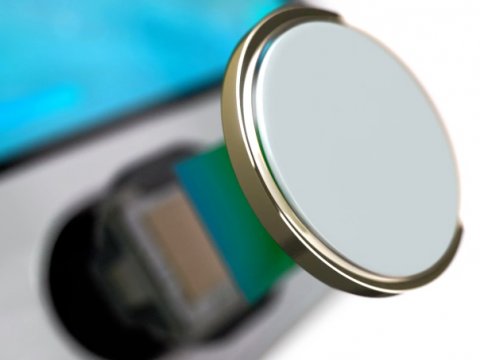
The fingerprint scanner Apple built into the iPhone 5S is a smash hit with reviewers.
It’s getting nearly universal acclaim. Walt Mossberg of the Wall Street Journal calls it a game changer.

It sounds like a major innovation that is going to completely change how we interact with our phones. Swiping to unlock is going to be a thing of the past.

Here’s a sample of the reactions:

David Pogue at NYT: “It’s nothing like the balky, infuriating fingerprint-reader efforts of earlier cellphones. It’s genuinely awesome; the haters can go jump off a pier.”

Walt Mossberg at WSJ: “After using Touch ID, I found it annoying to go back to typing in passcodes on my older iPhone.”

John Gruber of Daring Fireball: “Touch ID is way faster than ‘fast enough’. I’d call it ‘I can’t believe it works this quickly’ fast. It’s also very accurate — only a handful of times over the past week have I had to try a second time, and each of those times, I hadn’t really squared up my finger with the sensor.”

Jim Dalrymple of Loop Insight: “The fingerprint sensor solved a problem and makes my handling of the iPhone more efficient. That’s what a feature should do.”

Myriam Joire Engadget: “And it is indeed fast: the scanner was able to pick up all of our fingers in fractions of a second and from any angle. It’s so natural, in fact, that we almost forgot that passwords and unlock screens even existed on the 5s; on countless occasions we tried to unlock the iPhone 5 and 5c with the scanner before realizing that we had to use the “old-fashioned” slide-to-unlock method.”

Scott Stein, CNET: “A few previous smartphones have added fingerprint sensors before, like the Motorola Atrix, but those were more awkward bars that needed finger-swiping. The Touch ID-enabled home button feels invisible; it works with a tap, can recognize your finger from many angles, and feels like it has less of a fail rate than fingerprint sensors I’ve used on laptops. It’s impressive tech. It worked on all my fingers, and even my toe (I was curious).”

Read more: http://www.businessinsider.com/apple-fingerprint-scanner-reviewed-2013-9#ixzz2fFqOSZxD

Bidding Process – Procedures for the Sale of certain Assets and Intellectual Property of Optify, Inc.

Further to Gerbsman Partners (http://gerbsmanpartners.com)e-mail of September 9, 2013 regarding the sale of certain assets of Optify, Inc., I attach the draft legal documents that we will be requesting of bidders for certain Assets and Intellectual Property of Optify, Inc.  All parties bidding on the assets are encouraged, to the greatest extent possible, to conform the terms of their bids to the terms and form of the attached agreement.  Any and all of the assets of Optify, Inc. will be sold on an “as is, where is” basis and will be subject to “The Bidding Process for Interested Buyers”, outlined below.

I would also encourage all interested parties to have their counsel speak with Stephen O’Neill, Esq., counsel to Optify, Inc.

For additional information please contact Stephen O’Neill, Esq, 650 843 2719         oneill.stephen@dorsey.com

Please review in detail, the “Bidding Process for Interested Buyers” below.

The key dates and terms include:

The Bidding Process for Interested Buyers
Interested and qualified parties will be expected to sign a Confidential Disclosure Agreement (attached hereto as Appendix A) to have access to key members of management and intellectual capital teams and the due diligence “war room” documentation (“Due Diligence Access”). Each interested party, as a consequence of the Due Diligence Access granted to it, shall be deemed to acknowledge and represent (i) that it is bound by the bidding procedures described herein; (ii) that it has had an opportunity to inspect and examine the Optify, Inc. assets and to review all pertinent documents and information with respect thereto; (iii) that it is not relying upon any written or oral statements, representations, or warranties of Gerbsman Partners, or their respective staff, agents, or attorneys; and (iv) all such documents and reports have been provided solely for the convenience of the interested party, and Gerbsman Partners (and their respective staff, agents, or attorneys) do not make any representations as to the accuracy or completeness of the same.

Following an initial round of due diligence, interested parties will be invited to participate with a sealed bid, for the acquisition of the Optify, Inc. assets. Each sealed bid must be submitted so that it is received by Gerbsman Partners no later than Friday, October 4, 2013 at 3:00pm Pacific Time (the “Bid Deadline”) at Opitfy, Inc.’s office, located at 712 2nd Avenue, Seattle, Washington 98104.  Please also email steve@gerbsmanpartners.com with any bid.

Bids should identify those assets being tendered for in a specific and identifiable way. In particular, please identify separately certain equipment or other fixed assets.

Any person or other entity making a bid must be prepared to provide independent confirmation that they possess the financial resources to complete the purchase.  All bids must be accompanied by a refundable deposit in the amount of $200,000 (payable to Optify, Inc.).  The deposit should be wired to Optify, Inc.’s attorneys Murray & Murray, A Professional Corporation.  The winning bidder will be notified within 3 business days of the Bid Deadline. The deposit will be held in trust by Optify’s counsel.  Unsuccessful bidders will have their deposit returned to them within 3 business days of notification that they are an unsuccessful bidder.

Optify, Inc. reserves the right to, in its sole discretion, accept or reject any bid, or withdraw any or all assets from sale.  Interested parties should understand that it is expected that the highest and best bid submitted will be chosen as the winning bidder and bidders may not have the opportunity to improve their bids after submission.

Optify Inc. will require the successful bidder to close within a 7 day period. Any or all of the assets of Optify, Inc. will be sold on an “as is, where is” basis, with no representation or warranties whatsoever.

All sales, transfer, and recording taxes, stamp taxes, or similar taxes, if any, relating to the sale of the Optify, Inc. assets shall be the sole responsibility of the successful bidder and shall be paid to Optify, Inc. at the closing of each transaction.

If You Already Have An iPhone 5, Do Not Buy One Of Apple’s New iPhones This Year by Kevin Smith

gold-iphone-5s-4

Justin Sullivan/Getty Images

Apple Announces New iPhone 5S That’s Twice As Fast And Has A Fingerprint Sensor

By now you’ve heard that Apple unveiled its newest iPhones yesterday, the 5S and 5C.
The 5S is a faster version of the iPhone 5, which is being discontinued in favor of the colorful iPhone 5C.

If you already have an iPhone 5, you’re probably not considering an upgrade to the 5C. The 5C is essentially the same phone as the iPhone 5, but wrapped in a plastic shell.

I’ve had every iPhone that’s been released since the iPhone 3G, so my first instinct is to automatically want the 5S.

But is it worth it for most people to upgrade every year like I did?

In short, the answer is no.

Physically, the 5S looks exactly like the iPhone 5. The 5S has the same display, nearly identical design, and same screen size as the iPhone 5.

The 5S only separates itself from the 5 with a new gold color, a fingerprint sensor, a faster processor, and a better camera.

The best thing going for the 5S is its new fingerprint sensor, or “Touch ID” as Apple calls it. This new technology lets you use your fingerprint instead of a passcode to unlock your device.

Megapixel-wise the iPhone 5S’s camera is the same as the iPhone 5: 8MP. The difference is that the 5S’s has a better sensor that lets in more light. The flash also has two tones so it will give you more accurate image colors.

Sure, the new camera’s slow-motion feature sounds cool, but there are a ton of apps —Slowpro, for example— that will give you this same ability.

If you have an iPhone 5, you can still update your software to iOS 7, which will give your phone the same look as the 5S along with a ton of the new software features.

For most people, all those new features in the iPhone 5S won’t be enough to justify shelling out the cash for the upgrade. Plus, most carriers only let you upgrade your smartphone at the subsidized price every two years. That means if you have an iPhone 5 but still really want the iPhone 5S, you won’t be able to get it for $199. You’ll likely have to buy it unlocked for at least $650.

Basically, if you are an iPhone 5 owner, it really doesn’t make sense to upgrade unless you are the type of person who always has to have the latest and greatest. You should only upgrade if you have an iPhone 4S or earlier iPhone model.

Plus, there’s a lot to look forward to next year. If Apple follows its pattern, it will introduce a new iPhone with a new design in 2014. And there’s already chatter that next year’s iPhone could have a larger screen.

Read more: http://www.businessinsider.com/iphone-5-vs-iphone-5s-2013-9#ixzz2ecgLuUIf